
Street Foods of the World: Balut – Philippines' Most Daring Snack
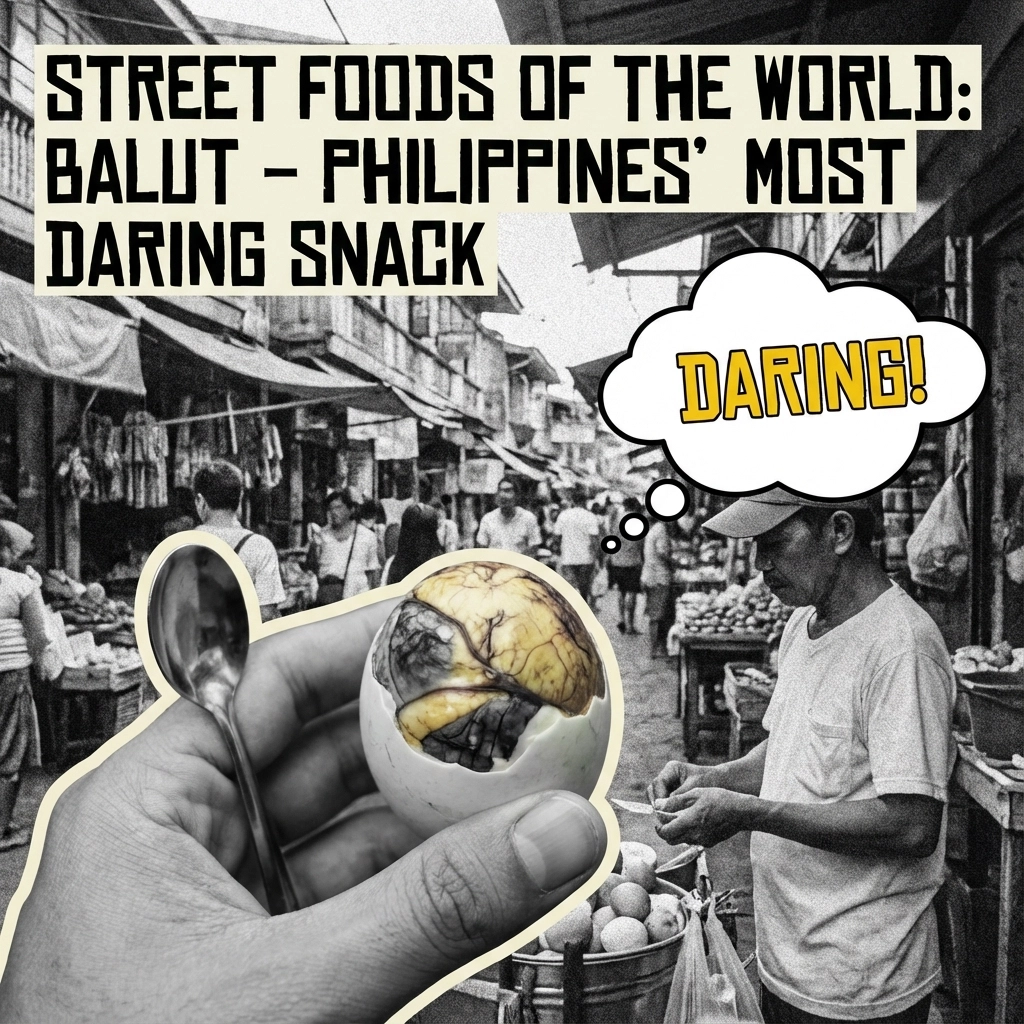
Picture this: you’re wandering through the bustling night markets of Manila, the air thick with tantalizing aromas and the excited chatter of vendors calling out their wares. Among the sizzling skewers and steaming noodle bowls, you hear a distinctive call: “Balut! Balut!” Now, here’s where your culinary adventure takes a decidedly bold turn.
Welcome to the world of balut – arguably the Philippines’ most infamous street food and definitely one that separates the culinary adventurers from the comfort-zone dwellers. This isn’t your average pub snack, folks. We’re talking about a fertilized duck egg with a partly developed embryo inside, boiled to perfection and eaten straight from the shell. Intrigued? Terrified? Maybe a little bit of both? That’s exactly the reaction that makes balut such a fascinating addition to any conversation about global street food culture.
What Exactly Is This Daring Delicacy?
Let’s dive straight into it – balut is a fertilized duck egg that’s been incubated for approximately 18 days before being boiled and served warm. Inside that unassuming shell, you’ll discover a complex culinary experience: savory natural broth, tender duck embryo, and creamy yolk all waiting to be savored.
This isn’t some modern food trend or Instagram-worthy creation. Balut has deep cultural roots, recognized as a national food of the Philippines and tracing its origins back to 1565 when it was introduced by Chinese immigrants. For over four centuries, this protein-packed snack has been nourishing Filipinos and challenging the palates of curious food lovers worldwide.

The preparation is surprisingly straightforward. Duck eggs are carefully incubated under controlled conditions, allowing the embryo to develop to just the right stage before the cooking process halts development. The result? A snack that’s both familiar and completely unique – imagine the comfort of a soft-boiled egg combined with the complexity of a rich, meaty broth.
The Street Food Experience: Manila After Dark
Here’s where the magic really happens. Balut isn’t typically found in fancy restaurants or upscale food halls. This is pure street food culture at its most authentic. As the sun sets across Manila’s sprawling cityscape, vendors emerge with their signature calls, carrying warm baskets or pushing small carts through neighborhoods and market areas.
The ritual of buying balut is part of the experience itself. Vendors keep the eggs warm in baskets lined with cloth or small portable warmers, ensuring each one is served at the perfect temperature. You’ll often see locals gathering around these vendors, sharing stories and laughter while cracking open their evening snack – it’s community dining at its most grassroots level.
What makes this street food particularly special is its timing. Balut is traditionally an evening food, often enjoyed as a beer accompaniment or late-night snack. The warm, protein-rich meal provides comfort and sustenance after long working days, making it both practical nutrition and cultural tradition rolled into one shell.
The Art of Eating Balut: A Step-by-Step Adventure
Ready to take the plunge? Here’s your guide to experiencing balut like a local. First, you’ll want to gently crack the top of the eggshell – this requires a delicate touch to avoid spilling the precious broth inside. Once you’ve created a small opening, bring the egg to your lips and sip the warm, savory liquid. Many describe this first taste as similar to chicken soup – rich, salty, and surprisingly comforting.
Next comes the main event. Carefully peel away more of the shell to reveal the contents within. The texture might surprise you – it’s softer and more tender than you might expect, with the developed embryo offering a chicken-like flavor that’s both mild and satisfying.

The seasoning game is where balut really shines. Filipinos typically enhance their balut experience with a combination of salt, vinegar, chili, garlic, and black pepper. Some prefer a splash of spicy vinegar, while others opt for a sprinkle of rock salt. The beauty lies in customizing the experience to your taste preferences – there’s no wrong way to season your adventure.
Why Event Planners Are Taking Notice
Now, here’s where things get interesting for those of us in the catering world. Balut represents the ultimate conversation starter at global street food festivals and cultural events. While it might not be appropriate for every corporate lunch or wedding reception, it’s absolutely perfect for adventurous dining experiences, cultural celebrations, or events designed to push boundaries and create memorable moments.
Think about it – what other single food item can instantly separate the bold from the cautious, spark debates about culinary traditions, and create lasting memories for everyone involved? Event planners looking to create truly unique experiences are increasingly interested in incorporating authentic cultural elements like balut into their programming.
At food festivals celebrating Asian cuisine or international street food, balut stations consistently draw crowds – not just of brave eaters, but of curious observers fascinated by watching others take the plunge. It’s dinner theater and cultural education wrapped up in one interactive experience.
Cultural Significance Meets Modern Reality
Here’s the nuanced part of the balut story. While this delicacy holds deep cultural significance and remains beloved by many Filipinos, its popularity is shifting in interesting ways. Increasingly Western dietary preferences and changing lifestyles mean that younger generations in the Philippines are sometimes less enthusiastic about traditional foods like balut.
This cultural evolution presents both challenges and opportunities. For cultural preservationists, there’s concern about losing traditional food practices. For event planners and food service providers, it represents a chance to introduce balut to new audiences who might never have encountered it otherwise.

The global Filipino diaspora has also played a role in spreading balut awareness. Filipino communities worldwide often seek out this comfort food from home, creating niche markets in cities from Los Angeles to London. Specialty stores now stock balut for homesick Filipinos and curious locals alike.
The Conversation Starter Factor
Let’s be honest – balut isn’t going to replace fish and chips or burgers as mainstream street food favorites. But that’s exactly what makes it so valuable for certain types of events. When you’re planning an experience designed to educate, challenge, or simply create unforgettable moments, balut delivers in spades.
Food truck festivals featuring international cuisine, cultural awareness events, or adventurous dining experiences all benefit from including authentic options like balut. It becomes a focal point for discussions about cultural differences, food traditions, and personal comfort zones. Guests who try it become instant storytellers, sharing their experience long after the event ends.
The key is context and presentation. When balut is introduced with proper cultural background, prepared by knowledgeable vendors, and offered alongside other Filipino street food options, it becomes part of a larger educational and culinary journey rather than simply a shock value novelty.
Modern Applications and Future Possibilities
The beauty of balut lies not just in its traditional preparation, but in its potential for creative adaptation. While purists might prefer the classic street-side experience, innovative chefs and food service providers are finding ways to introduce balut concepts to broader audiences.
Some establishments now offer balut-inspired dishes – incorporating the flavors and concepts while making them more accessible to hesitant diners. Others focus on the educational aspect, providing detailed explanations of the cultural significance and preparation methods alongside the food itself.
For catering companies willing to embrace authentic international cuisine, balut represents an opportunity to offer something genuinely unique. Whether it’s for cultural festivals, educational events, or simply adventurous private parties, having the knowledge and connections to provide authentic balut experiences sets you apart in the competitive world of event catering.
The global street food movement continues to celebrate authentic, traditional foods from every corner of the world. Balut, with its centuries-old heritage and undeniable conversation-starting power, represents exactly the kind of authentic cultural experience that modern food lovers are seeking.
So whether you’re planning your next international food festival or simply curious about expanding your culinary horizons, remember that sometimes the most memorable food experiences come from stepping outside our comfort zones and embracing the bold, the traditional, and yes, even the daring. After all, isn’t that what great street food is all about?
