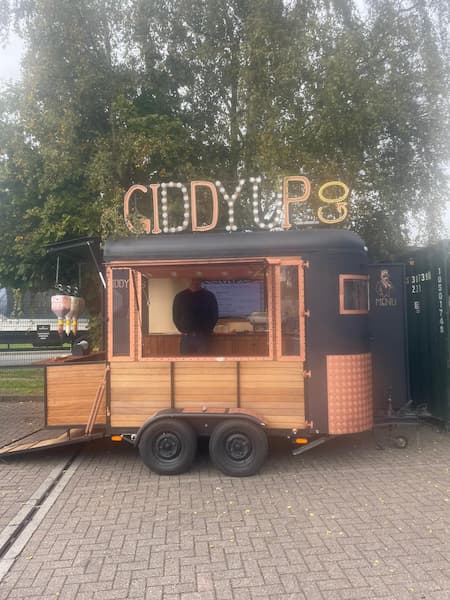
Gourmet burgers are one of our main lines nowadays. Despite the campaigns for healthier heating, veganism etc, burgers are still massively popular.
Like most people I have made many a visit to the famous American chains over here, namely McDonalds and Burger King. In fact I am old enough to remember when Wimpy was a massive chain, and truth be told, what I remember of them, their burger was better than either of the USA behemoths.
However there are many other chains or ‘burger joints’ in the US of A. Non at the size of the main two, but some pretty big and expanding. Some of the smaller ones are nowhere near in size, but have massive public followings. We are gonna look at a few of these, their history and menu’s.
Our first contender is the quaintly named In-N-Out Burgers. First launched in the Los Angeles suburb of Baldwin Park California by Harry and Esther Snyder in 1948. The original store was tiny, only some 10ft square. Harry would visit the local wholesalers each morning to pick out the freshest ingredients whilst his wife Esther would take care of the administration and bookkeeping.
The beef patties were made by hand fresh every morning, and quality was a watchword for them from the off.
Drive Through
Harry would work in his garage on a night, after long days of cooking burgers. Later in 1948 he put together a two way voice box allowing his customers to order food without even leaving their cars. This focus on drive through was a mainstay of the companies business model. In fact it wasn’t until restaurant No.21 in 1979 that they even had a sit down section to allow guests to consume their food on the premises.
By 1963 they had grown to the extant that they opened their own processing plant for the burgers, up till then Esther had prepared each patty using a hand press.
By the time Harry Snyder died in 1976, at the age of 63, the chain had grown to 18 restaurants.
Second Generation
Harry’s son 24-year-old Rich Snyder took the reins after his fathers death and expanded the chain rapidly, building the chain to 90 stores over the next 20 years.
Sadly in 1993 whilst returning from opening store No. 93 in Fresno, California, Rich died along with four other passengers when the light aircraft he was in crashed due to being caught in the wake turbulence of a larger aircraft that landed in front of them.
His brother Guy took over and aggressively expanded the company to over 140 locations in six years before dying from an overdose of painkillers.
Esther Snyder died in 2006 at the age of 86 whereupon the presidency passed to Mark Taylor, former VP of operations.
Animal Burgers
They launched their ‘Animal’ burger in 1961, where the beef pattie was fried in a thin layer of mustard, add extra pickles and grilled onions were added.
Protein Burger
Their protein burger, dispenses with the bun and wraps the whole lot in lettuce, for a healthier option.
Flying Dutchman
A real unusual one this, think of taking the burger out of the bun and , well and nothing. That’s what you get, two patties, two slices of cheese (well that yellow stuff the Americans claim is cheese), pickles salad and wrap it in a slice of paper. In N Out have many items on their secret menu. Not on display in the restaurants, but viewable on the website.
In n Out Burgers Crossed Palm Trees
The company tend to have a pair of crossed palm trees at the front of each location. This is allegedly in allusion to Harry Snyder’s favourite movie, It’s A Mad, Mad, Mad World.
Bible Quotes
In keeping with his Christian beliefs, many In n Out Burgers items such as the drinks cups have bible references printed on them.
William Hesketh Lever (1851-1925), founder of Unilever and later the first Viscount Leverhulme, once said (allegedly) , “I know that half the money I spend on advertising is wasted. My only problem is that I don’t know which half.” The remark was also attributed to a number of other businessmen, and is widely considered to have never been uttered.
Whatever the truth of the matter, advertising is now a huge industry, prevalent in everyday life. We are all constantly bombarded by adverts for everything from new teeth to milk shakes. I can’t honestly say that seeing an advert makes me want to rush out and partake in the cult of that product, but who knows, it quite likely might have some subliminal effect.
Burger Battles
One class of advert that we have all seen, and still do regularly, comes from the burger companies. In the UK we only really have two major players, and the rest tend to be small businesses that don’t have major advertising budgets. Across the pond, there are a number of major chains with restaurants in the hundreds, so there is a much wider range of adverts to look at.
McDonalds
The biggest chain is obviously the home of the golden arches. Being the top of the tree probably gives McDonalds a different perspective on what they need to advertise. Everyone else is throwing pot shots at McD’s but they aren’t trying to topple anyone else. As a result, much of their advertising has been, well, bland. It emphasis how good the food is, or how cheap the food is, and that’s about it. Probably the right thing when you are trying to sell good food cheap, but not exactly edgy or giving us the wow factor.
I tried googling ‘Edgy McDonalds Ads’ and come up with the ad below, visually more exciting, but not what I would call edgy burger advertising.
Burger King
The perennial number two chain around the world, Burger King has spent much of its advertising dollars trolling McDonalds. It has positioned itself as the cheeky younger brother to the number one chain, and this shows in its adverts. Few of the King’s adverts have really been about the food, they have always had an edgier tone, generally poking fun, occasionally skirting controversy, sometimes even classy.
Burger King spent nearly a year trolling McDonalds without anyone actually realising. Until at the end they released images of their ads taken from a different angle. What this revealed, was that all of the year’s adverts for their whopper, had actually also contained an image of a Big Mac. Only because of the Macs smaller size, you couldn’t actually see it as it was positioned behind the whopper.
McDonalds in a rare display of edginess responded with an ad of their own exclaiming ‘Behind every good burger is a great burger’.
One which polarised opinion was the mouldy whopper ad. Much had been written about the abnormally long life of some McDonalds products, with it being claimed they were so full of preservatives that they don’t actually decay. BK produced a series of ads showing that over time their burgers turned mouldy. Although not mentioning their rivals by name, the inference was obvious, BK’s stuff was naturally free from additives.
Based in the German market, BK announced a range of really weird burgers for mother’s day, these were to satisfy the cravings of pregnant ladies.
With this one BK decided to take a leaf out of Carl Jr’s book and use sex to sell burgers. Or rather suggestiveness. Not sure if you would get away with this one in the current climate!
A brilliant piece of work, this promised you a Whopper for 1 cent, but only if you droe to a McDonalds, then used the app whilst you were in the restaurant to order a Whopper for collection from the nearest BK.
Always up with current affairs, this one was in the middle of the Covid crisis.
One of their classier ads, this one was asking you to order from their rivals. During lockdown, everyone was struggling, and their take on it was ordering from a fast food joint, any joint, would be helping people who needed the money.
The last one pokes fun at their flame grilling of burgers. For the record we all feel here that BK burgers do taste better than their rivals, whether it is down to being flame grilled, who knows.
Carl’s Jr. and Sexy Burger Advertising
In 1941 Carl Karcher and his wife Margaret, borrowed $311 against their Plymouth car, and added $15 in savings to buy a hot dog stand. By 1945 they had opened their first drive in, called Carl’s Drive In Barbecue. 1956 saw their first Carl’s Jr. opening, so called because it was a smaller version of their main drive in.
Carl’s Jr. started with pretty much the same adverts as other chains. Images of juicy looking burgers and prices.
Then in 2005 came a new direction. They decided that sex sells. Or More precisely, scantily clad women writhing and moaning whilst eating burgers sells.
Their first ‘slutburger’ ad as it was infamously christened, saw Paris Hilton, a fancy car, soap and water and a burger.
This was followed by a steady stream of sports illustrated alumni, models and singers. All stunningly attractive, all scantily clad and all eating burgers.
Predictably the ad caused offence. With one commentator claiming it had ‘set back feminism four decades’. On the other hand the ‘All Natural’ ad featuring Charlotte McKinney has garnered some 4.5 BILLION media impressions worldwide, so they are effective.
I must admit the all natural one was bloody weird, the ad boasted that the burger was a “first ever fast food” item made with “no antibiotics, no added hormones, and no steroids.” I mean WTAF, are they doing in a burger in the first place.
Otley Burger Company
I wasn’t really expecting tiny little independant companies to appear in this list. But it seems that the Otley Burger Company of Leeds, takes provocation to new levels. Or more accurately sheer bad taste. They leverage social media to promote their business. A good move for small businesses as it can be leveraged to create massive benefit at little cost.
Their Mother’s day advert however, used shock value that took bad taste to a new level. Advert below!
A&W Burgers
A&W just happen to be the oldest restaurant chain in America. Founded in 1919 by Roy W. Allen as a roadside drinks stand in Rodi California, they have grown to some 900 stores.
Their single entry into our advertising hall of fame, is the launch of their bigger 1/3 pound burger, playing on the theme of bigger is better. Unfortunately it failed in spectacular fashion. Why? Well evidently your average American doesn’t do fractional maths very well. And by God anyone knows that 4 is bigger than 3 so a 1/4 pounder has to be bigger than a 1/3 pounder don’t it.
A&W are intending making a comeback with a new ad for a 3/9 of a pounder, in the hope that Americans take 9 as bigger than 4.
Grill’d
A relatively modern addition, Grill’d was formed in Australia in 2004 in Melbourne. Growing to some 150 stores, the company aired an add that caused outrage. It was meant to troll McDonalds, by having a creepy clown character. unfortunately having said clown chase two kids down a dark alley then appear to flash them, isn’t really acceptable advertising nowadays. In fact it wasn’t really acceptable advertising in any day.
Wendy’s Where’s The Beef
Founded in 1969 in Ohio, Wendy’s is the third biggest burger chain in the world.
Like most chains Wendy’s has the biggest, bestest, juiciest blah blah blah. Their adverts are pretty cookie cutter with everybody else’s. Except for one classic. The ‘Where’s the beef?’ advert aired in 1984, with the unknown actress Claire Peller, an elderly lady sat with two other friends looking at a tiny beef pattie in a big bun and questioning how much beef there is. This ad skyrocketed Wendy’s profits and became a classic line.
Lockdown during Covid had many effects. Most of them not good. However sometimes adversity leads you down a new path. In our case a more profitable one. We had always provided what we called fun catering services. Doughnuts, candy floss etc. During lockdown we had a number of our corporate clients ask us to provide catering services more along the lines of a main meal.
This led us into providing a range of services such as gourmet burgers, Chinese noodles, jacket potatoes etc. This was a good move as it turned out. However it did rapidly create a major problem for us. Namely that of power requirements.
For doughnuts etc, the client would provide a single 13 amp socket which was more than adequate. however when we moved up to mains catering, we would have for instance a couple of chip fryers, a couple of hot plates for the burgers, a chip warmer and perhaps a water boiler.
All told we could quite easily need not far off 40 amps. So the conversation would go like this.
“We need at least four seperate 13 amp supplies”
Client, “Yep no problem”
Only on the day what would happen is would set up, ask for our power supplies and be handed a 6 way adaptor with the comment that 4 were for us, and the other two for the DJ and pizza van. So they were intending to run around 60 amps from a single 13 amp supply. Predictably we would either melt the socket, or more usually blow the fuse or circuit breaker.
10 K.V.A. Generator
10kva-Generator
We already had some 10 K.V.A. portable generators, which combined with some new LPG powered equipment we obtained, allowed us to carry out most events.
Unfortunately many venues don’t allow the use of LPG due to the purported safety risks. So eventually we decided that we would need more electrical power.
66 K.V.A. Higher Power
We investigated what was on the market, and took an in depth look at what are requirements were, and come to the conclusion that around 30 k.v.a. would be fine.
So obviously we went out and bought one with a bit over twice the power at 66. Why you may ask?
Easy, 30 would do us for the time being, but any expansion or multiple items at the same time and suddenly we would be back to struggling with power again. Additionally the larger unit was only some £800 more than the smaller version. Was physically the same size, and used the same engine, so running costs should be on par. In short the only difference was the actual electrical alternator which converts the engine motion into actual electricity.
Multiple Sockets66kva GeneratorSpill Kits
We had a selection of single and three phase sockets added for ease of use, had our new branding applied to the unit, and added one of our new spill kits to provide insurance in the case of any fluid spills.
We also had a custom built trailer unit made from our friends at Fairtech Fabrications, this allowed us to transport the unit behind any of our range of vans.
One of the worlds oldest amusement parks. Tivoli dates from 15 August 1843, when Georg Carstensen first opened the park after being granted permission by the King.
Originally it consisted of exotic and enchanting gardens that amongst other visitors so impressed one Hans Christian Anderson that he was inspired to write the fairytale, the Nightingale.
1844 The Tivoli Boys Guard
Constantly on the lookout for new ideas, Carstensen introduced the Honorary guard. From small beginnings this grew to not only become a cultural icon, but also evolved into a musical education centre for children.
Carstensen sadly only ran the park for five years. Leaving in 1848 when he enlisted to fight in the war against Prussia. This led to him being fired by the Tivoli board citing breach of contract. On his return to Denmark in 1857 he founded a rival park at Alhambra in Frederiksberg in competition with Tivoli. He didn’t actually get to see this one in operation, dying from pneumonia at the age of 44.
1874 The Peacock Theatre
Erected in 1874 the current theatre is the oldest building in the park, and protected by law. A bit like our listed buildings. The theatre has the motto “Shared joy with the people”, engraved above the stage in Chinese letters.
Hans Lumbye, the composer was in charge of the music from the start of the park. A violinist and prolific composer, he put together some 800 pieces of music. Known in some places as the ‘Strauss of the North’, he composed the world famous Champagne Galop. Touring with his orchestra during the Winter months, he sadly died the same year the theatre opened.
The Restaurant WIVEL, later called Wivex became a notorious water hole for a group of infamous First World War profiteers. Later the national broadcaster used it to broadcast dinner concerts. Eventually it closed in the 1960’s.
1914 Tivoli Roller Coasters
Tivoli had a roller coaster in 1842, a seven second thrill ride.
In 1914, the new coaster was opened. Called Rutschebanen (or roller coaster in English), this is still operating today, making it one of the oldest wooden coasters in existence. Up until the installation of moderner cars, it actually had brakemen riding in each car to slow it on turns and downhill.
Sabotage
During World War Two, the park suffered two unfortunate instances of sabotage, when pro Nazi Danes snuck into the park after it closed and planted a number of fire bombs. Extensive damage was caused and the park was closed for two weeks whilst the damage was rectified.
1951 Walt Disney Visits
The first Disneyland was opened in California in 1955. Walt Disney, its founder paid a number of visits to the Tivoli park in 1951. He enjoyed the ambience of the park and was hoping to impart something similar to his own park.
Today the park has in excess of four million visitors per year. Making it the second most visited seasonal amusement park in the world, and the biggest in Scandinavia.