Category: Fun Story

Event Planning, Fun Story, funfair events, Funfair Rides

Weird Carnival Rides, The Flying Cars

6 March 2021

Over the years there has been some way out and wacky rides designed for the funfair industry. Some have worked and became classics. Others were either too unreliable, vomit inducing or just downright dangerous. The flying cars could be argued to be dangerous as it did in fact kill someone. However the someone failed to fasten their safety belt so its an arguable case.

The ride was something quirky. The drum rotated and the cars were fixed to the track, similar to a roller coaster. The cars had a brake pedal which clamped the car to the track causing it to climb the drum. Once it had climbed you released the brake to allow it to fall back down and up the other side. Eventually you built enough momentum up to go 360 around the full drum.

The Ride In Action

Unfortunately someone failed to fasten their seatbelt and was killed in the fall which resulted in the ride being removed. Modern technology would probably solve that problem now with interlocked safety bars and the like.

There was records of a second, double drum flying cars ride being built for Conklin’s Carnivals, but scant records exist of that model or any other rides.

The ride was built by a German manufacturer, but despite the wonders of the world wide web, we have been unable to find out which particular one.

Catering, Event Planning, Fun Story

Dam Raider Gin & Mosquito Vodka

4 March 2021

We use a wide range of suppliers for our catering operations. Many of them are major catering suppliers, however we do like to use small boutique companies where possible.

One such supplier is a small batch distillery that produced a range of gins, and a vodka.

Coastal Distillery

Based in the small coastal town of Mablethorpe in Lincolnshire. The company has an unusual history, being formed by a printer and an undertaker. They shared an interest in the drinks industry and a love of unconventional design.

Dam Raider Gin

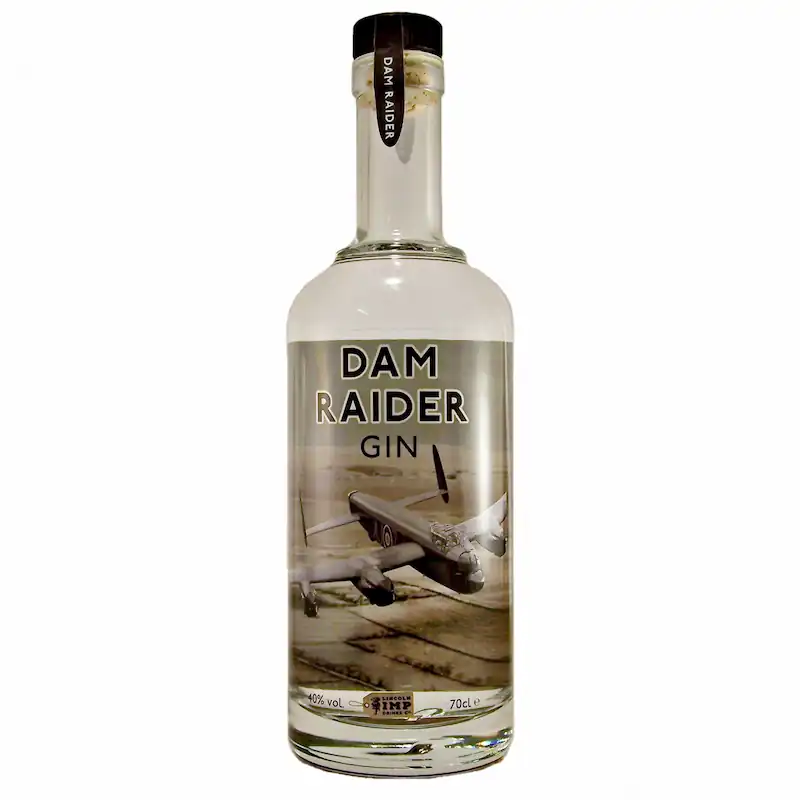
Wanting to draw upon the rich RAF heritage of the region, they launched a gin as their first product. Named after the famous 617 squadron of operation Chastise fame. The famous dam busting raid in case you weren’t following. Contrary to popular misconception, they weren’t christened the ‘Dam Busters’, that was a film. They were actually known as ‘Dam Raiders’.

Dam Raider Gin
Dam Raider Gin

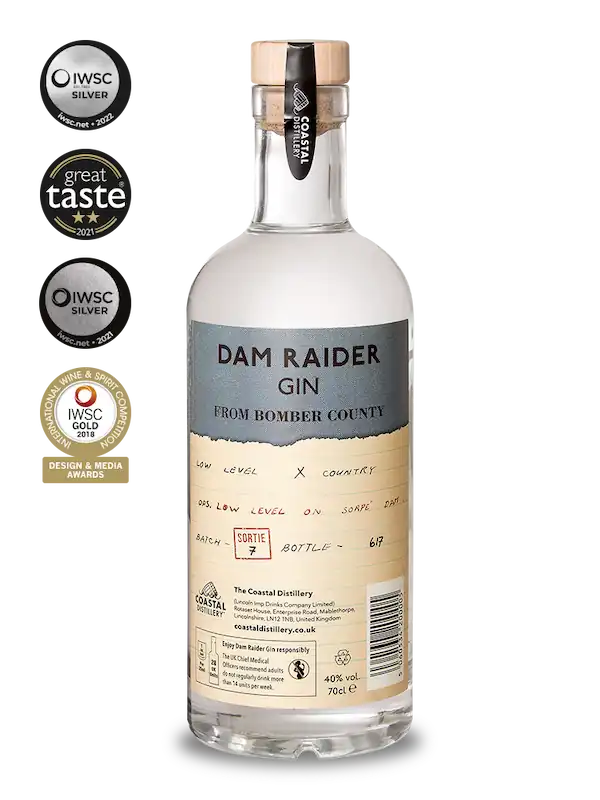
The bottles are fabulous, the front contains an image of the famous Lancaster bomber flying over RAF Scampton. The rear an extract from an actual pilots log book.

Dam Raider Rear
Dam Raider Rear

A donation from every bottle sold is also made to the International Bomber Command Centre and Thorpe Camp Visitor Centre. Home to the squadrons that flow out of RAF Woodhall Spa during the war.

Mosquito Vodka

Their other aviation related product is a vodka offering, named after the De Havilland Mosquito twin engined plane of WWII fame. This wooden wonder could fly faster that most fighter planes. It was used as a night fighter, fast bomber, pathfinder and reconnaissance airplane.

Mosquito Vodka
Mosquito Vodka

Again the rear of the bottle contains an extract from a pathfinder squadron crew member. The neck tag contains an airman’s poem tied to the bottle with genuine WWII parachute silk.

We tend to use these on our gin bars, especially when providing services at the many military functions we attend.

Event Planning, Fun Story, funfair events, Funfair Rides, General

Eli Bridge, A Manufacturer Profile

28 February 2021

Next up in our ongoing series of amusement ride manufacturer profiles, is the long established American company of Eli Bridge.

The founder W.E. Sullivan visited the original Ferris Wheel at the Columbian Exposition in 1893. He (like George Washington Gale Ferris) owned a bridge building company. After his ride he became fascinated by the ride and decided to build one of his own. In collaboration with the machinist James H Clements they began construction of their own wheel.

This debuted in Jacksonville’s Central Park and was called the Big Eli Wheel. The ride was a success and Sullivan set up a company to manufacture his wheels.

Their first wheels were powered by 6h.p. huber steam engines and came in two sizes, 45ft portable models and 50ft park based designs. There was also a 55ft ‘Aristocrat’ model.

The company was originally located in Roodhouse, Illinois, next to a railway track, allowing for easy distribution around the country. In 1919 a new purpose built building was erected in Jacksonville, also next to the railroad. The company has been there ever since. It’s 76,000 sq ft facility contains a room tall enough to erect a big wheel in.

Modern Eli Bridge Wheels

The company still produces wheels to this day. A modern Eli Bridge, is, truth told, little changed from the earlier models. Sure, there is no doubt the construction will use moderner materials and methods. But the look and feel of the ride definitely contains the same DNA. That isn’t meant as a criticism. The fact is the early formula worked well, and still works well, so why change it?

One major change is the drive system. For generations, the wheel used a wire rope, that passed through a pulley which was rotated by an electric motor. The system worked fine, and still does as hundreds of wheels around the world continue its use. It did however have a couple of disadvantages. The rope gradually stretched, and as it did the drive began to slip. Murphy’s law would dictate this happened just as you got busy. The other failure was when the rope snapped. A sensible operator would keep a spare, and could change it relatively quickly, but it is still inconvenient and would lose you revenue.

Rim Drive

To counter the wire rope issues, the company has now switched to rim drive systems. This works by attaching a flat rim to one side of the ride. An electrically driven wheel would contact the rim and as it rotated, would rotate the ride. No slipping or snapping and a much more precise regulation of the speed available from a modern inverter driven control system.

Scrambler A New Chapter

1955 brought a new chapter for the company, with the launch of its Scrambler ride, the first non wheel addition to its portfolio. Known over here as a ‘Twist’ the ride took the American amusement industry by storm, and is still prevalent at funfairs around the world today, albeit in many versions from many different manufacturers.

Other Products

They also sell a couple of children’s rides, including the quirky Spider Mania, to which I can’t really find a comparable ride in the UK.

A line of fire pits for camping expeditions and Boy Scout troops round off the companies product list.

. One quirky fact is that the word Bridge was deliberately left in the company name, so that they could still build bridges, their original business model. Though records indicate that since they started selling wheels, they have only actually built one bridge.

Check out our profile of Fabbri the Italian manufacturer.

Catering, Event Planning, Fun Story, funfair events, Funfair Rides

Dismaland A Theme Park With A Difference

24 February 2021

The world renowned graffiti artist, Banks’y happens to be a favourite of my daughters. To be honest I quite like his style too. A few years back when she was studying art at school, she made Banksy her special project, so one day we jumped in the car and drove to Bristol to visit his artworks in the flesh so to speak.

When he announced the Dismaland project, a theme park not suitable for kids as he put it, at an old Lido in Weston Super Mere. We were lucky enough to secure tickets for us and a couple of Emmerson’s friends.

My wife hates using our car due to the size and fuel consumption, but none of the vans would fit 5 people, so I got to enjoy a blast all the way down the country in my Mas. During the periods the wife fell asleep I got to enjoy the 400+ horses under the bonnet without screams of “Look at the fuel consumption” lol.

When we got to the park, the queue was enormous. It was then that I realised a possible problem. I had actually bought the tickets on ebay, not through a regular channel as they were next to impossible to obtain. Basically the ticket was a sheet of A4 paper with a barcode. Anyone could have put them together, or the same ticket could have been sold multiple times.

Crap, but I did have a cunning plan, I sent the kids in first to see what happened. In the event they walked straight in so we were ok.

A Park With A Difference

Now the park itself was different, very different, but something we all enjoyed. However I have to say it brought a worrying trend home. The whole idea was that the park was meant to be a dismal, unfriendly place, with surly staff that couldn’t be bothered with the customers. A spoof on a traditional fairground.

Thing I realised was, the customer service part was pretty much what you see on some fairgrounds today. Young kids in the stalls playing on their phones who viewed you as a nuisance if you wanted to play. Operators in the rides looking bored and disinterested. At one point the wife and I were stood debating whether we should go into a particular structure. When the girl on the outside shouted at us “In or out, in or out, don’t stand there blocking the ride, make your mind up!”

I burst out laughing, because a very good friend of mine has exactly the same customer facing skills. I have seen her shout very similar commands when some poor unfortunate is stood at the ride entrance making their mind up.

I was impressed by the thought that had gone into the attractions. To be sure they were taking traditional funfair attractions and twisting them into some steam punk, distressed interpretation of what they would have been. But in some cases hitting the nail right on the head.

It’s Impossible To Win!

Take topple the anvil for instance. I should imagine its physically impossible to knock an anvil off the shelf with a rubber ball. But then, there are games I have seen on fairgrounds that are equally impossible. The traditional coconut shie was renowned for having ‘duds’, that is some of the coconuts you were trying to knock off were actually metal replicas. Nothing short of an Exocet missile would move them.

One of my favourite shows was death riding the dodgem car. Played to trance music it was one of the earlier attractions we encountered and was just plain funny.

There was plenty of Banksy’s political commentary, such as the coin operated remote control boats. Which happened to be boats filled with refugees. Or the exhibition of various weapons used by governments to oppress the people.

There were also some weird commentary on consumerism and minority representation such as the gifts below sold in the shop.

Battlefield Casualty Action Man

But The Food Was Good

Lol, even the catering didn’t escape his vitriol.

Although some people slated the park, I think it is because they just didn’t get the sarcasm mixed with social commentary undercurrent that it was put together with. We had a great time.

Sources;

Dismaland

Banksy

Fun Story, Funfair Rides, General

Power Generators And The Decline Of British Industry

20 February 2021

With funfairs being a travelling industry, it’s fairly obvious that rides and such like cannot be connected to a fixed electricity supply. The answer is portable generators.

In the very early days, these tended to be steam powered. The traction engines used to transport the rides could have the drive belts disconnected and switched to dynamo’s to provide the 110v direct current supply used at the time.

As things progressed, and diesel powered lorries took over from the steam engines. A similar system was put into place. The drive shaft from the gearbox to the driving axle on the vehicle could be disconnected. A pulley was then attached to the output of the gearbox and drive belts used to drive a dynamo. With progress, the power source slowly began to gravitate towards 240v alternating current, same as powers a house.

I am 50, and can just barely remember helping my dad ‘drop the shaft’. Basically this was disconnecting the propshaft, dropping it to the ground and connecting the drive belts, a ritual at every fairground.

The ultimate evolution was the switch to dedicated generators. A totally separate engine and alternator or dynamo, or sometimes both piggy backed. These tended to have a more regulated speed control designed to keep the engine running at optimum speed for power generation.

Gardner Engines

A British manufactured engine rapidly became a firm favourite to build power generators. Built by a Manchester based firm called L.Gardner & Sons.

Originally a sewing machine maker, they moved into gas engines around 1895, then into the new fangled diesel engines in 1903. Their initial engines tended to be for marine use. In 1929 they fitted an engine into a Lancia bus. This was such a success that they ended up introducing a new range titled LW, geared towards on road use.

Gradually they grew to provide power for many of the existing lorry manufacturers throughout the UK, and also licensed the design to Dutch manufacturer Kremhout, Belgian makers FN and Miesse and French manufacturers Bernard and Latil . A larger range was introduced to power diesel locomotives, and things were good for the company as they became the world’s leading exporter of diesel engines.

A number of things were noticeable about their designs. Their thermal efficiency (how much energy was converted to actual power output as opposed to heat) was a shade over 40%. To put this into perspective, state of the art computer controlled engines in the 2010’s managed to hit 43%, a mere 3% improvement over a design 80 years old, and currently around 50% is as good as it gets.

Legendary Reliability

The other stunning achievement was the unparalleled reliability. A huge number of Gardner’s are still in use around the globe. From powering junks in Hong Kong harbour, to fishing boats in the 3rd world, to lorries in Africa. The marquee became a byword for long lasting trouble free use. In part the formula of a large engine working lightly meant the components were all relatively unstressed whether it was being used for a power generator, a locomotive or road going power..

The crankshaft also benefited from not only being secured vertically, as was normal, but also being horizontally braced. This gave the bottom end of the engine tremendous strength, and warranty claims for failure in this area were virtually unheard of.

Fall Of A Legend

Sadly, like many industries in the UK, Gardner’s were doomed to a decline and eventual demise. During the 70’s other manufacturers gradually increased the power output of their offerings. Gardner, controlled by Hugh Gardner stubbornly refused to follow. Whilst virtually every other manufacturer was adding turbochargers to provide more oomph, Hugh insisted on keeping his engines naturally aspirated. As gross weights steadily increased, more power was needed, and Gardner just couldn’t keep up.

When they eventually developed a turbocharged range it was too little too late. Cummins Engines of America were selling a 10 litre engine outputting 325 horse power. Gardners closest option was the massive 15.6 litre LYT that managed 350 HP, but had the inherent drawbacks of an engine of that size being heavier and thirstier on fuel, the opposite of Gardner’s traditional strengths..

Adding to the typical stunningly poor decision making of British upper management, the offer to take over Rolls Royce engine division to broaden their portfolio was turned down. Additionally they reached a point where there was a 2 year waiting list for engines to be supplied for new lorries. Perhaps an agreement with another manufacturer to licence build them could have alleviated this. Whatever the main cause, eventually they just lost too much sales volume and with the advent of Euro 1 emissions regulations they were closed down.

Unlike many former industries where the the British used to lead and then become basically extinct in that industry. Power generators are still being built by Perkins Engines.

Midget Submarines

One novel use of the Gardner engine, was the smaller 4LK model. Fitted into the Royal Navy’s X-class midget submarines. These were used to cripple the German battleship Tirpitz.

Some of the main Power Generator Manufacturers are;

Cummins

Caterpillar

Generac