Category: Funfair Rides

Catering, Event Planning, Fun Story, funfair events, Funfair Rides

Newcastle Hoppings, A Major Fair

1 June 2021

Newcastle Hoppings is the largest travelling funfair in Europe (though both Nottingham Goose fair and Hull Fair also claim the title). A major fixture in the funfair calendar. Held in the North East city of Newcastle Upon Tyne over 9 days in June.

With over 300,000 visitors a year, and featuring over 60 major adult rides, and a plethora of children’s rides, games and catering to match. The event is held in June to coincide with the Northumberland Plate. Part of the flat season races for horses of three years or older.

It is situated on the Town Moor, a large grazing land just outside the city centre (during the first world war it was held in Jesmond). The showmen commonly refer to the event as the Town moor, or even just ‘The Moor’, rather than the hoppings name used by the locals.

Temperance Festival Association

The driving force behind the establishment of the hoppings, was Alderman William Davies Stephens, chairman of the Temperance Festival Association. The association, typical of the Victorian era do gooders, felt that the horse race would attract drinking and gambling. They wanted to provide a temperance festival for the miners and other workers as an alternative, to save them from the fires of damnation.

I suppose in a way it was a better idea than the Americans had. Our abstinence gave us a major funfair, the American prohibition gave them Al Capone.

Early Years

In the beginning, the event will have been typical of fairs of that era, stalls, games and sideshows would have formed the bulk of the event. Indeed in the North East, funfairs are often referred to as ‘The shows’ in allusion to the preponderance of that type of attraction.

These tended to be animal managaries, or the popular at the time human freak shows. Large steam powered rides were appearing on funfairs by then, and quite possibly would have attended the hoppings, but at that time they were still a supporting act.

Over the next 50 years the event began to resemble what we would recognise today. With some of the early thrill rides appearing, Octopus, dive bomber, waltzers, all designed to fly you higher, spin you faster and scare witless.

A well known ride, the Moonrocket of Shaws, built in 1939. This was typical of the early rides that would have appeared at the Town Moor.

The Modern Era

Nowadays, well not 2020, and possibly not 2021 due to the little matter of a global pandemic, most of the top rides from around the UK appear at the event. Immaculate examples of the old favourites such as dodgems and Waltzers still jostle with the thrill rides for customers. There are fabulous examples of all the current funfair games, children’s rides and food stalls.

A look at the fair from the air shows the sheer scale of the event. Hull and Nottingham might possibly have more rides in attendance, or be classed as bigger due to some other statistic. But for sheer acreage, there isn’t anything else in the UK that comes near.

2013 was notable for the fair being cancelled due to the severe weather leaving the ground in a poor state. Work has since been carried out to improve drainage and add a metalled road to prevent a recurrence.

Charity

The event was always noted for the free riding the showmen provided for a number of charities, the Variety club would bus as estimated 3000 children in to enjoy the showmen’s efforts, usually on the first evening of the event.

Indeed records indicate that the very first year of the festival saw a tea provided for 1000 of the cities poorest children.

The Name Hoppings

When we used to attend the event, I often wondered about just why it was called the Hoppings. I presumed it was one of those stories lost in time. However recently I came across the official website for the event, maintained by the Freeman of the City/Newcastle Council. They offered two possible explanations for the name. One is that hopping was a very old name for a dance.

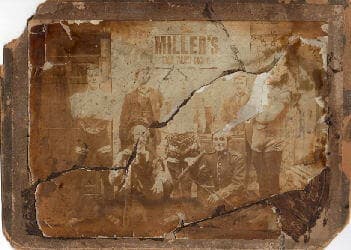
The other explanation the offer, is that the showmen used to wear sacks as cloths. These would become infested with fleas and the showmen being bitten would ‘hop’ about. Hmm, the photo below is a typical old image of showmen. Actually one of our earliest corporate entertainment crew who provided a show for Queen Victoria. Take a look, although it is in a poor state, it sure looks to me like they were wearing regular type cloths. Nary a cloth sack in sight.
Candy Floss Crazy Corporate Team

Sources;

Wiki Hoppings

Hoppings Funfairs

Event Planning, Fun Story, funfair events, Funfair Rides

“Work From Home…If You Can”

23 May 2021

‘Work from home if you can’, has been the echoing call, since the first lock down in march. The call from Boris Johnson and his team.

Due to the current pandemic many businesses have been closed and working from home has been of paramount importance. With many people turning rooms in their homes, or escaping to the garage to put together a make shift office.

One you probably wouldn’t think of is a work from theme park set up. In Japan they have announced a new initiative in order to encourage working from home. The initiative being to utilize their theme parks. A large theme park in Tokyo is offering ‘workcation’ packages. Giving employees across Japan the opportunity to work next to a beautiful pool or even on a Ferris wheel! yes that’s right you can work from a Ferris wheel.

The park charges 1,900 yen which is roughly around £14 for a weeks ticket pass. The pass includes a booth located at the pool and an hour in a private carriage on the Ferris Wheel. WIFI services are located throughout ready for you to connect your laptop or tablet to.

Japans, Work From Home Management

Japan, although a large country has managed the pandemic very well and is currently near normality with the rest of the theme park also open, which means that after a hard days work you can pay a little bit extra and purchase a park ticket allowing you to chill and unwind on all the fairground rides available…although remember you cant scream on the scary rides because that is against the covid rules.

Japan has primarily moved their businesses to being based at home. The government requested companies to have around 70% of their employees working from home. With this in mind they have been coming up with new inventive ways to encourage staff to take this option, Firstly they introduced the Theme park scheme, and then secondly they placed workstatiosn around National parks that people could rent and visit in a hope that people would reconnect with nature.

An  IT solutions firm FLEQ was among one of the first companies to encourage employees to work from the theme park. In the first week around 10 employees used the amusement park as their new office. Feedback from the employees was all very positive! however some said it was hard to concentrate at first as once on the Ferris wheel they just wanted to admire the view!.

Fun Story, funfair events, Funfair Rides

Eyerly Aircraft Company, A Manufacturer Profile

15 May 2021

There aren’t a great deal of amusement ride manufacturers that started life building aeroplanes. The American Eyerly Aircraft CO. was initially set up to manufacturer training aids for pilots. The first was the curiously entitled ‘Whiffle Hen’, an airplane which only used two gallons of fuel per hour of flight.

The craft derived it’s name from a bird thought to be good luck that appeared in the Popeye cartoons, everyone thinks Popeye gained his strength from eating spinach, but in the early days he used to rub the whiffle hen instead.

Lee Eyerly’s dream was to make flight available to all classes, not just the rich. He was responsible for building Salem Airport, and ran a flight training school, as well as taking people up in his own plane at fairs and events.

His second great invention was the Orientator, basically and airplane fuselage suspended between what looked like a giant tuning fork. The wind from the propellor streamed across the aircraft wings and surface controls and allowed the pilot to bank climb and roll, just like in a real aircraft but without the cost and danger associated.

A few were sold (including four to the Cuban air force), but sales began to slow down. It was suggested by someone who remains unrecorded by history, that he take the device to a local funfair, or Midway as our American cousins refer to them. Allegedly he also sold rides in a real aeroplane that he flew, but soon noticed that the queue for the Orientator was far longer than for the real plane.

That lighbulb moment saw the focus of his company switch to amusement ride manufacturing. The trainer was re christened the Acroplane and was sold purely as an amusement device.

Line Of Amusement Rides

This was just the beginning. The ride was quickly followed by the Loop-O-Plane, Roll-O-Plane, Spider, Fly-O-Plane, all designed to give people a taste of what it was like to fly, just at that period in history when Aviation was beginning to take off, excuse the pun.

The Rock O Plane was invented in 1947, and the ride type still survives on many funfairs today. Some in the original style, others have been modified to create a slightly more thrilling and up to date ride.

The Octopus

Perhaps his most popular ride was the Octopus. Little seen nowadays on the modern fairground, there are still a few doing the vintage circuit at shows and rally’s, but it is considered a bit tame for the modern generation of thrill seekers.

The company continued in the business up until the mid 1980’s. Sadly in 1988 at a Florida fair, an arm on an Octopus ride snapped. The arm was suffering from metal fatigue. The crack was paint covered and unnoticed by both the ride owner and the State inspector. A 17 year old girl died from head injuries. In the wake of the lawsuit that followed, the company closed its doors in 1990.

The genesis of the Eyerly Aircraft Company was certainly unique as ride manufacturers go.

Sources;

Consumer Product Safety Commision

Eyerly Aircraft Company

Lagoon History

Event Planning, Fun Story, funfair events, Funfair Rides

The Dive Bomber, History Of an Iconic Ride

10 May 2021

Most of the early funfair rides were things like carousels, Noah’s arks and dodgems. Exciting rides, but all with a similar movement, you go around in circles. What we would call thrill rides came later, and nowadays most of the high thrill attractions have you leave the ground. One of the earliest examples of this was the Dive Bomber.

Initially created by the Eyerly Aircraft company which was formed to create equipment to help train pilots. They moved into the amusement ride arena, and gradually moved away from their original business model. Much of what they designed had an aviation feel, and the dive bomber was no exception.

Roll O Plane

Patented in 1938 by Eyerly, as the ‘Roll-O-Plane’, the ride had two cylindrical shaped cars on the end of a rotating boom. As the arm rotated the ends of the cylinders rotated to keep the riders sitting upright. The chain drive made it a particularly noisy ride, added to the usual decor of a fighter plane and it was an imposing, thrilling ride for the era.

Lusse Dive Bomber

Lusse Brothers of Blackpool (American designers) developed the ride for the UK market under licence from Eyerly. Building their first version in 1939 and the last of 25 examples in 1949. With the recent end of WWII the ride was perfectly themed for the fairgoers of that era.

One of the drawbacks was its low passenger capacity, but a number of enterprising UK showmen, joined two rides together to double this as in the Carters model above.

The rides were a high maintenance device and eventually fell out of favour, I can just remember them as a kid in the 80’s and only for a few years. Truth be told I seem to remember them having a propensity to fold up, what Elon Musk would call a RUD (rapid unscheduled disassembly). The testing regime in those days wasn’t as developed as today, with x-ray and dye penetration testing, so I think the metal was a little overstressed for the job it was doing.

The Modern Bomber

Like many things in life, the wheel turned and a new version appeared. Built by Italian manufacturer Fabbri as the Booster Maxx, this is a much bigger, much faster and carries a lot more riders (up to 16). It is also a lot more sturdily constructed with modern techniques and materials. It is easily one of the highest and fastest rides on the circuit. Bringing the same aerial thrills to new generations.

Sources;

National Fairground Archive

Fun Story, Funfair Rides

Reverchon Industries, A Manufacturer Profile

16 April 2021

The star of our article today is a Gallic manufacturer. Gaston Reverchon, a young Parisian created a workshop in the suburbs of Paris to build coaches in 1929, having previously worked at Renault and also repairing luxury cars such as Rolls Royce and Bentley. At some point he ventured into the world of amusement ride manufacture by building dodgem cars. At that time a typical dodgem car was a wooden board on wheels, with a seat and a steering wheel. This led to the creation of Reverchon Industries.

Reverchon, inspired by the looks of American automobiles, designed a car with bright metallic colours on a metal frame, this was an instant success.

By the late 1930’s, Gaston realised that there was a developing market in not only building parts for rides, but in building the complete ride. 1937 saw the launch of the Telecombat, featuring small military airplanes similar to the Fabbri ride of the same name.

Gaston was joined by his sons after the war, and they diversified into producing a range of different rides. Continuing the development of their dodgem cars, pioneering the use of composites in the build of the cars to replace the heavy tin bodies that were prone to damage. They introduced the first token system for dodgems in the 1960’s, and were the first to install headrests in the early 70’s.

The Golden Years Of Reverchon Industries

By the 70’s the company was at its zenith. They were building around 50 rides every year, and upwards of 2000 dodgem cars. They had built the company up to employ 270 staff.

The late 70’s saw some exciting new developments at the company. They created their first fold up dodgem ride. Instead of their existing 2 day set up for 6 people, the new type rides could be set up by an individual if necessary.

Log Flume

They also built their first log flume ride. A ride consisting of flumes, where the riders sit in hollowed out log shaped boats and travel through the ride with the flow of water. Usually there are a number of drops on the ride which create spectacular splashes, the riders at the front tending to get rather wet. This was installed at the Bagatelle Park in Berck France.

Roller Coasters

The company created its first roller coaster in 1990. Built at the French theme park of Le Pal. Named the Siberian Tiger, it was a steel roller coaster, with a tiger’s head on the front of the train.

Reverchon installed the first version of its Spinning Mouse coaster in 1997. This became one of the companies most popular designs, and was installed at Dinosaur Beach in Wildwood New Jersey. The vast majority of coasters built by the company after this were of the spinning type.

In 2003 the design was licensed to Zamperla, a major Italian ride manufacturer to build and market Reverchon designs worldwide. this agreement lasted a little over 2 years before being dissolved, with Zamperla retaining the rights to design and market it’s own spinning coaster.

Sadly the original company encountered difficulties in the early part of the 21st Century. They were declared insolvent in 2002, but managed to recover from this. Their second insolvency however in 2008 ended with Reverchon Industries closing down.

A subsidiary company SAMC-Avia still manufactures rides and markets them under the Reverchon name.

Reverchon Industries