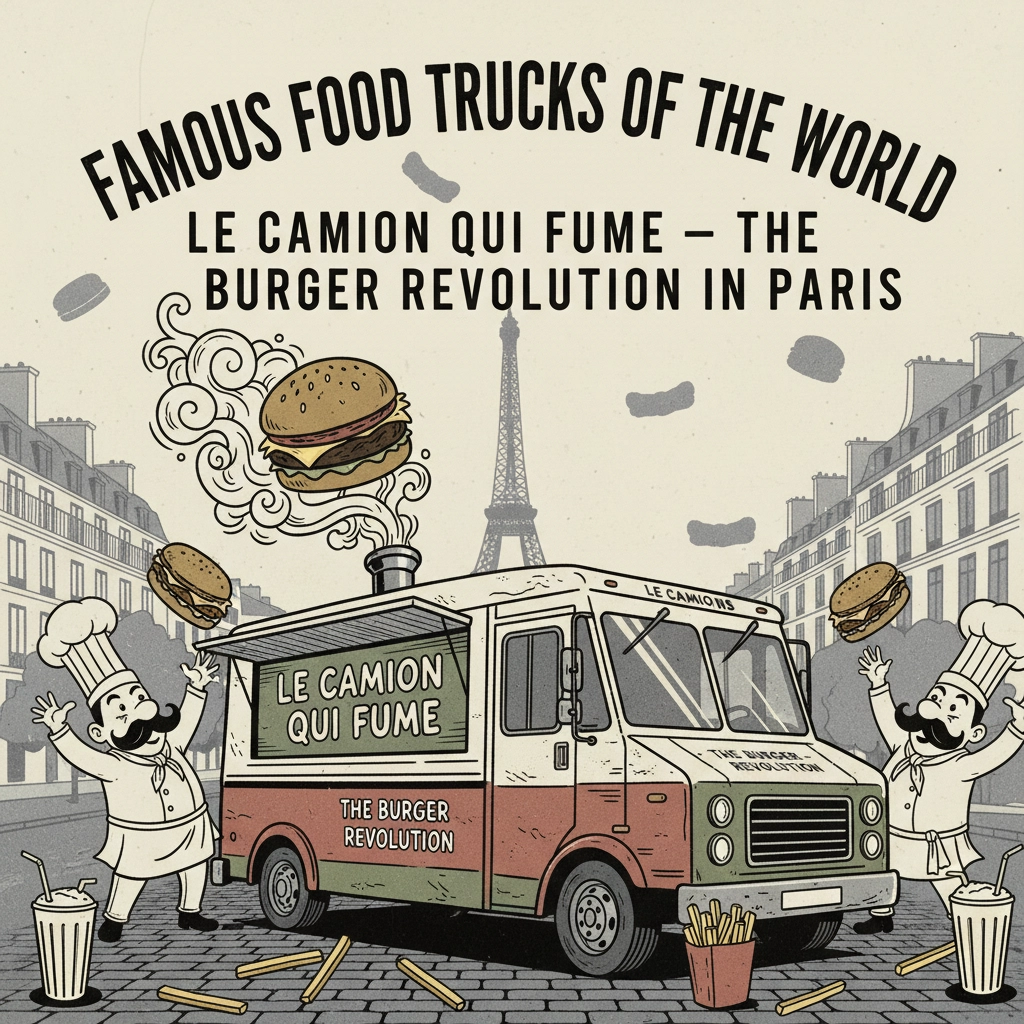
Picture this: It’s 2011 in Paris, the gastronomic capital of the world, where three-hour lunch breaks are sacred and street food means a hurried croque-monsieur from a corner café. Then suddenly, a bright blue truck appears on the streets, serving something utterly scandalous – American-style burgers. The locals are horrified… until they taste one.
Meet Le Camion Qui Fume (literally “The Smoking Truck”), the audacious food truck that didn’t just serve burgers in Paris – it sparked a full-blown street food revolution that changed French dining culture forever.
The Revolutionary Beginning: When American Met French
In a city where culinary traditions run deeper than the Seine, Kristin Frederick had what many would call a crazy idea. This Californian chef looked around Paris in 2009 and noticed something shocking – there wasn’t a single food truck serving quality, gourmet meals anywhere in the city. Not one!
While food trucks were already transforming street food scenes from Los Angeles to Austin, Paris remained stubbornly traditional. But Frederick saw opportunity where others saw impossibility. She envisioned bringing Brooklyn-style burgers to the cobblestone streets of the City of Light, complete with artisanal ingredients and that distinctly American casual dining experience.
The skeptics were everywhere. “Americans don’t understand food,” they whispered. “Parisians will never queue for burgers,” they predicted. Boy, were they wrong.
Meet the Maverick Behind the Movement
Kristin Frederick wasn’t your typical chef looking to make a quick buck. This California native had already fallen in love with Paris and understood both cultures intimately. She knew that to succeed, her burgers couldn’t just be good – they had to be extraordinary.
Frederick’s genius lay in her approach: she kept the concept refreshingly simple while maintaining uncompromising quality. No fancy molecular gastronomy tricks, no pretentious ingredients with unpronounceable names. Just perfectly crafted burgers using premium ingredients, served from a mobile kitchen that could bring the experience directly to hungry Parisians.
When Le Camion Qui Fume rolled onto the streets in 2011, Frederick was essentially betting her career on the idea that food culture is universal – that great taste transcends borders and traditions.
The Blue Truck That Changed Everything
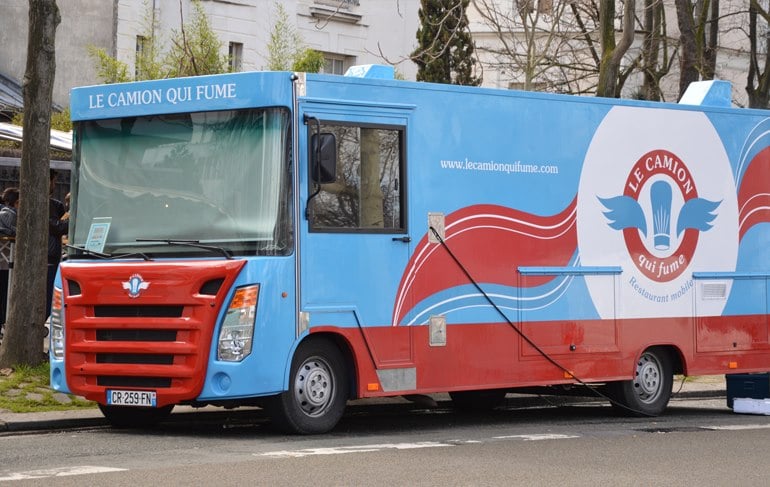
The iconic blue truck became more than just a mobile kitchen – it became a symbol of culinary rebellion. With its bold branding and unapologetically American menu, Le Camion Qui Fume stood out like a delicious sore thumb against the backdrop of traditional Parisian eateries.
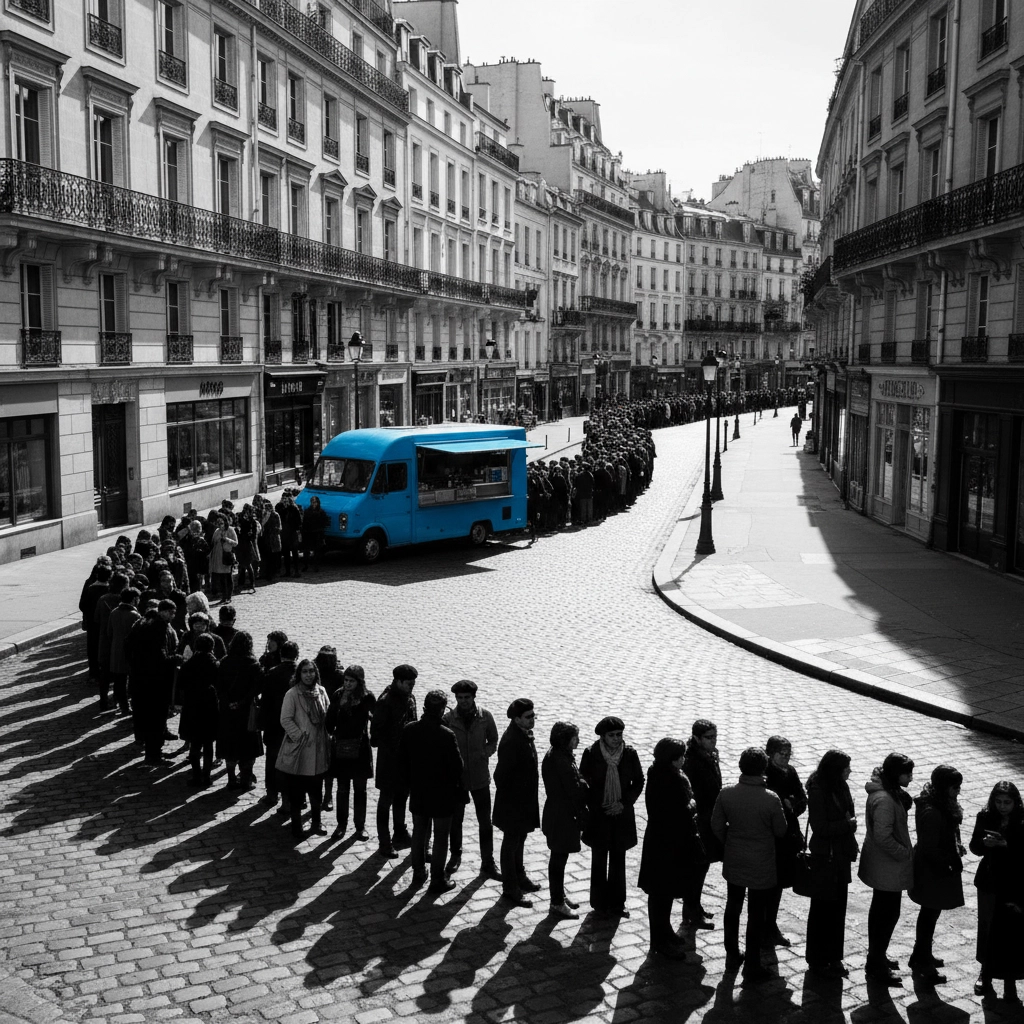
But here’s where the magic happened: instead of rejecting this foreign invasion, Parisians embraced it with surprising enthusiasm. Lines began forming – not just polite French queues, but excited crowds willing to wait over forty minutes for a taste of Frederick’s creation. The sight was so unusual that even the New York Times took notice!
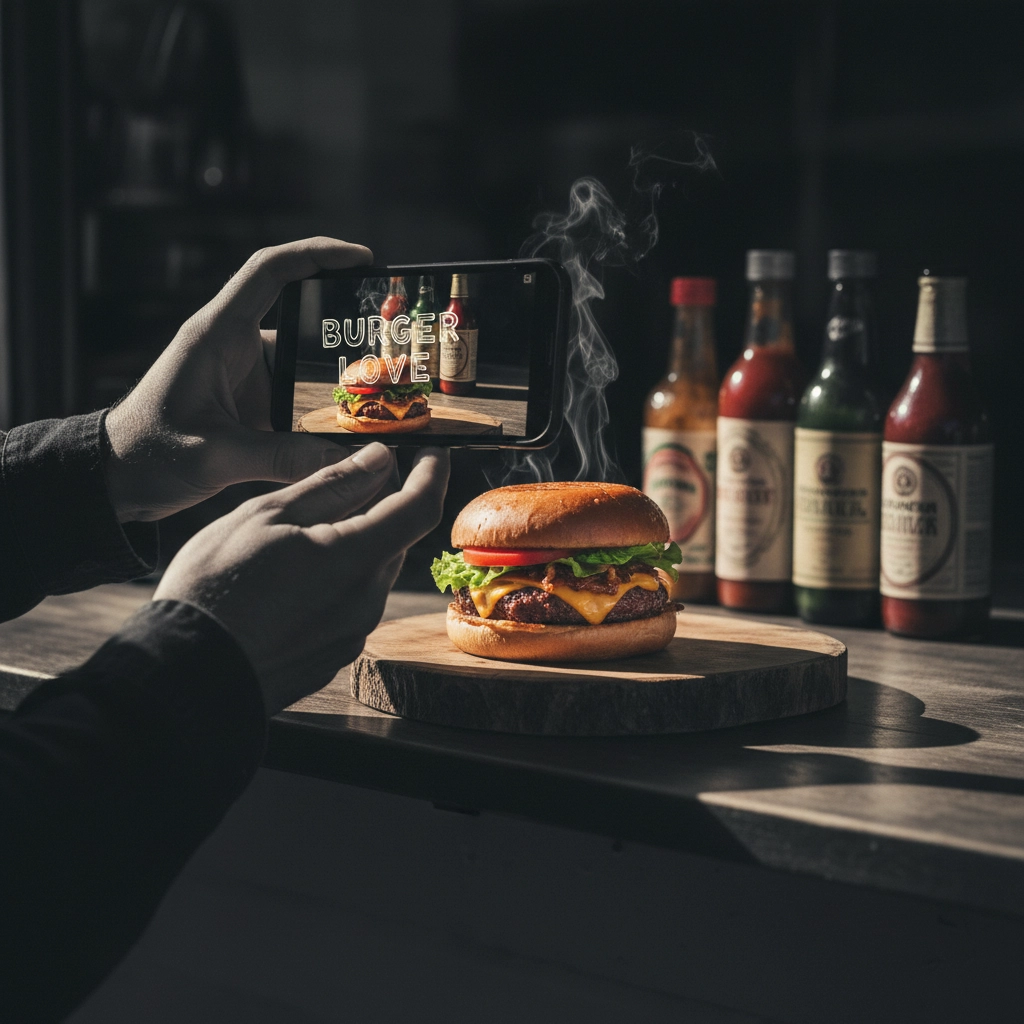
The menu was deliberately simple yet irresistible. Each burger was a masterpiece of balance – perfectly seasoned patties, fresh toppings, and buns that somehow managed to stay intact despite the generous portions. Frederick understood that in a city obsessed with culinary perfection, every single element had to be flawless.
From Street to Success Story
The numbers tell an incredible story of rapid growth and cultural acceptance. By April 2013, just two years after launch, Le Camion Qui Fume was serving more than 500 burgers per day across two trucks. The operation exploded from Frederick’s initial two-person team to twenty employees, with five people working each truck plus additional staff managing the overwhelming demand.
This wasn’t just business growth – it was a cultural phenomenon. Frederick had to expand her laboratory space from 50 square meters to 160 square meters in Paris’s 11th arrondissement just to keep up with demand. The success story continued with the launch of Freddie’s Deli in July 2013, bringing traditional American sandwiches to Parisian palates.
The financial backing followed the cultural acceptance. In 2015, the Family Office Arts et Biens, backed by the Lévy family (former shareholders of Devanlay-Lacoste), injected 1.5 million euros into the business. This wasn’t just an investment in a food truck – it was recognition that Frederick had fundamentally changed how Paris thought about casual dining.
The Ripple Effect: Transforming French Food Culture
Le Camion Qui Fume’s impact extended far beyond serving delicious burgers. It challenged deeply ingrained French attitudes about American cuisine and proved that Parisians were ready to embrace casual, high-quality street food despite centuries of formal dining traditions.
The truck’s success opened the floodgates for other food entrepreneurs. Suddenly, the streets of Paris began welcoming diverse food trucks offering everything from Asian fusion to gourmet sandwiches. What Frederick started became a movement that transformed the entire landscape of Parisian street food.
Today’s thriving food truck scene in Paris – with its incredible diversity and quality – can trace its roots directly back to that brave blue truck that dared to serve burgers in the shadow of the Eiffel Tower.
Why This Matters for Today’s Food Scene
Fast-forward to 2026, and Le Camion Qui Fume continues to innovate. After focusing on fixed restaurant locations, the original food truck made a triumphant return to the streets, proving that sometimes the classics are worth revisiting.
The brand now operates a sophisticated multi-platform approach: one mobile food truck, three permanent restaurants across Paris (in the 11th and 6th arrondissements and Ivry-sur-Seine), and multiple Deliveroo dark kitchens. This evolution shows how successful food truck concepts can grow while maintaining their original street food spirit.
For today’s food entrepreneurs and catering professionals, Le Camion Qui Fume offers invaluable lessons:
• Quality trumps tradition – Great food can overcome cultural resistance
• Simplicity sells – Sometimes the best concepts are the most straightforward ones
• Authenticity matters – Frederick succeeded because she stayed true to her vision
• Timing is everything – Recognizing market gaps can lead to revolutionary success
• Evolution is essential – Successful brands adapt and grow while honoring their roots

The legacy of Le Camion Qui Fume reminds us that the best food innovations often come from the simplest ideas executed with passion and precision. In a world where culinary trends come and go faster than Paris fashion weeks, this blue truck proved that authentic flavors and genuine enthusiasm for great food can create lasting change.
Whether you’re planning your next catering event or dreaming of starting your own food truck empire, remember the lesson of Le Camion Qui Fume: sometimes the most revolutionary act is simply serving extraordinary food with infectious enthusiasm. After all, great taste is the universal language that brings people together – whether you’re in Brooklyn or the boulevards of Paris.