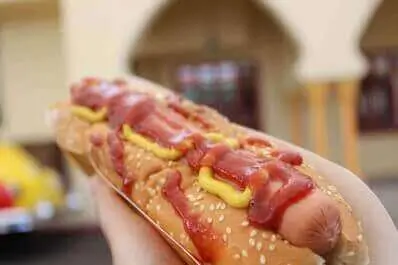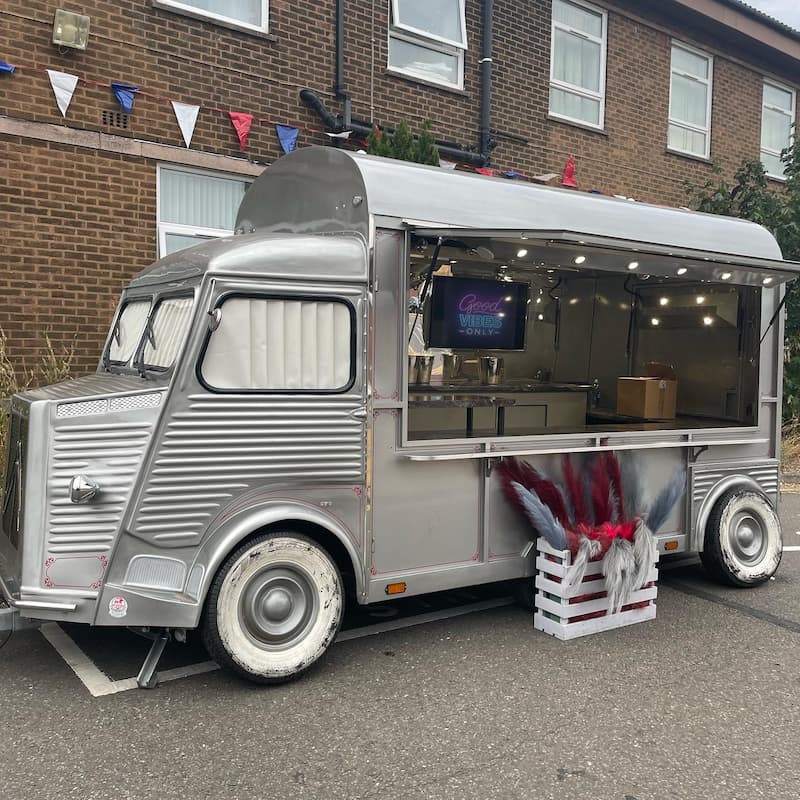
Looking for a sizzling, scrumptious hot dog experience that’s as unique as it is delicious? Look no further than the Little Red Hot Dog Van, your one-stop-shop for quirky hot dog cravings!
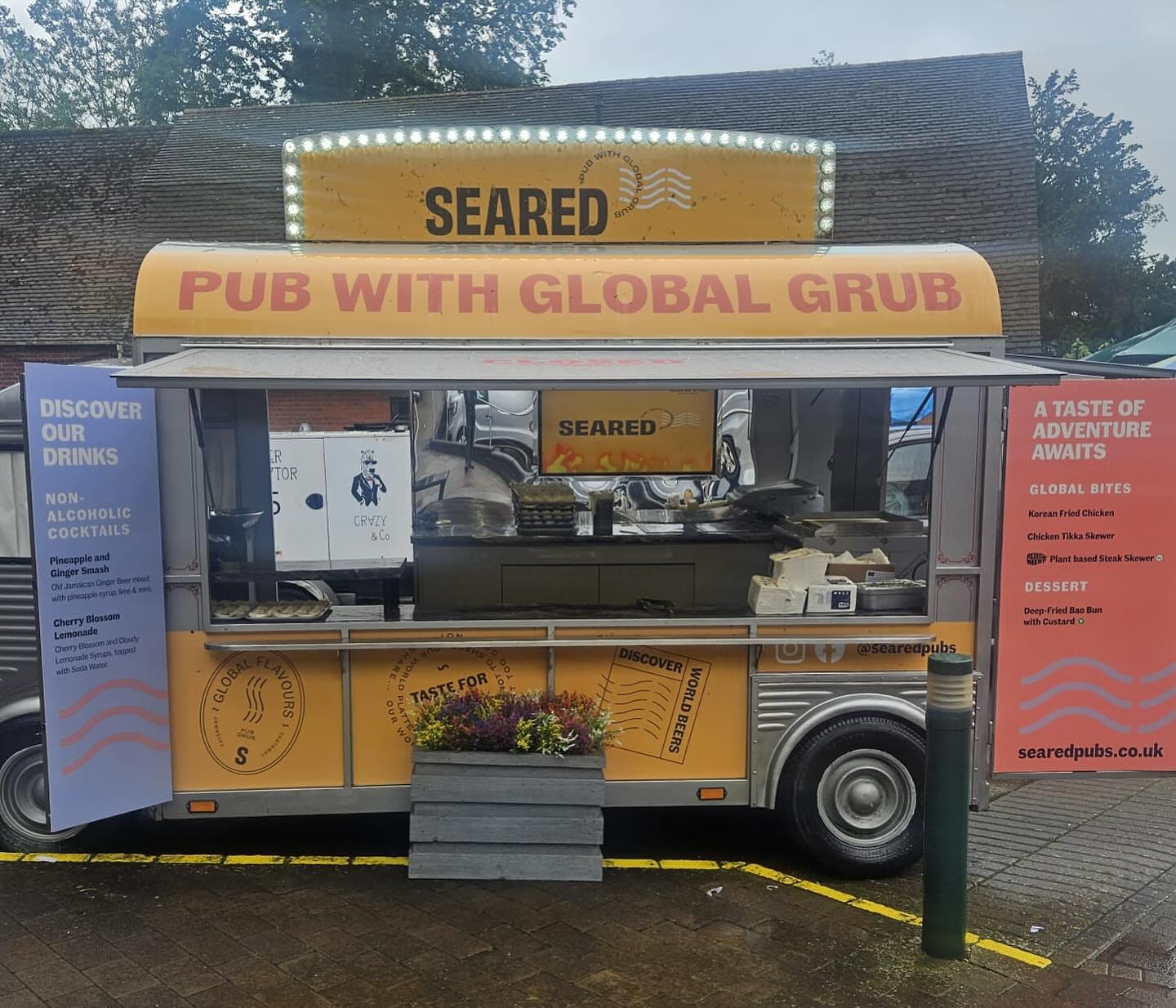
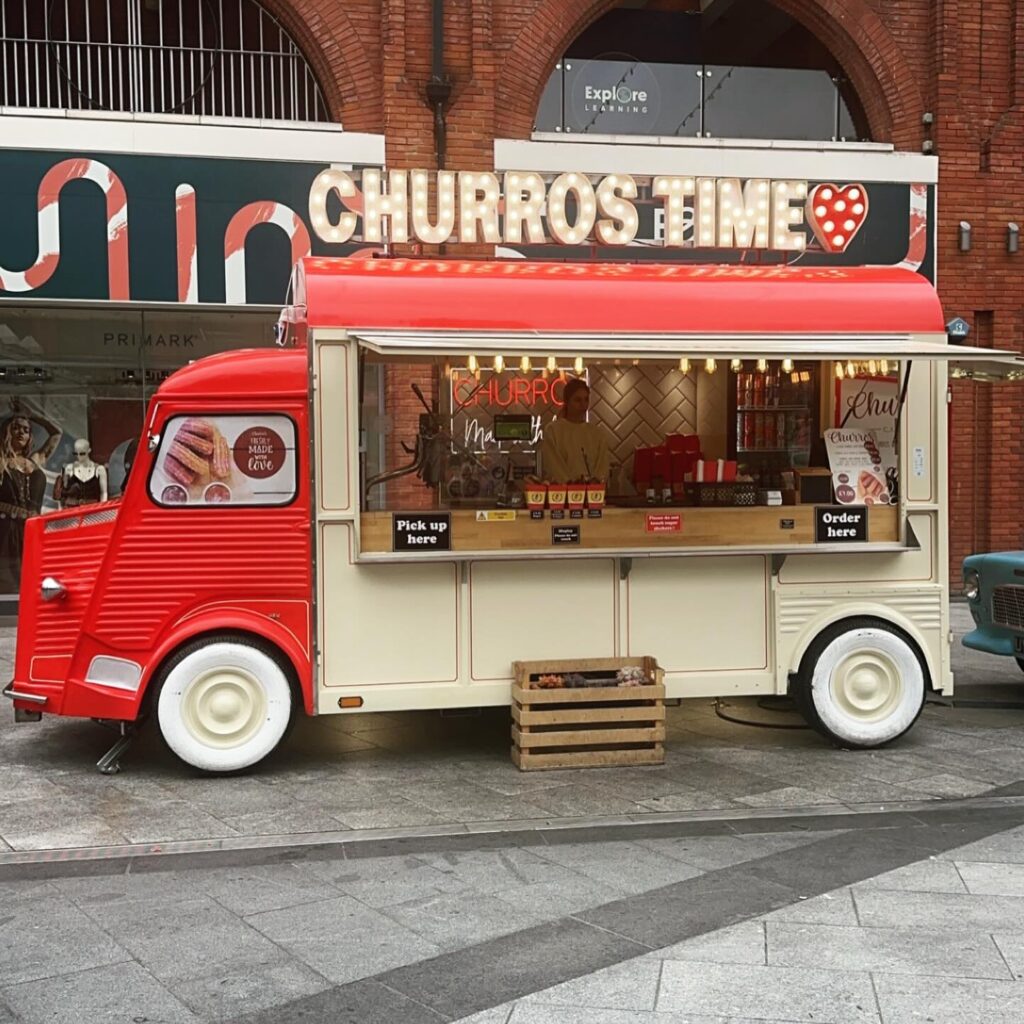
Built onto the chassis of a classic Citroen 2CV van, this just oozes gallic charm. Good food is no longer enough, you need a service that stands out on the ‘gram.’
Also available offering Pimms, Waffles, Hot Chocolate, doughnuts and much more.
Promotional Opportunities
This broad red panels make this ideal for branding if you want to use it for brand activation, exhibitions or other promotional usages.
We can apply simple graphics in house for events, or we have a local graphics company that can add full four colour printing graphics or even a full vinyl wrap.
Little Red ScreenOur Little Red Citroen Food truckLittle Red Doughnut Cart
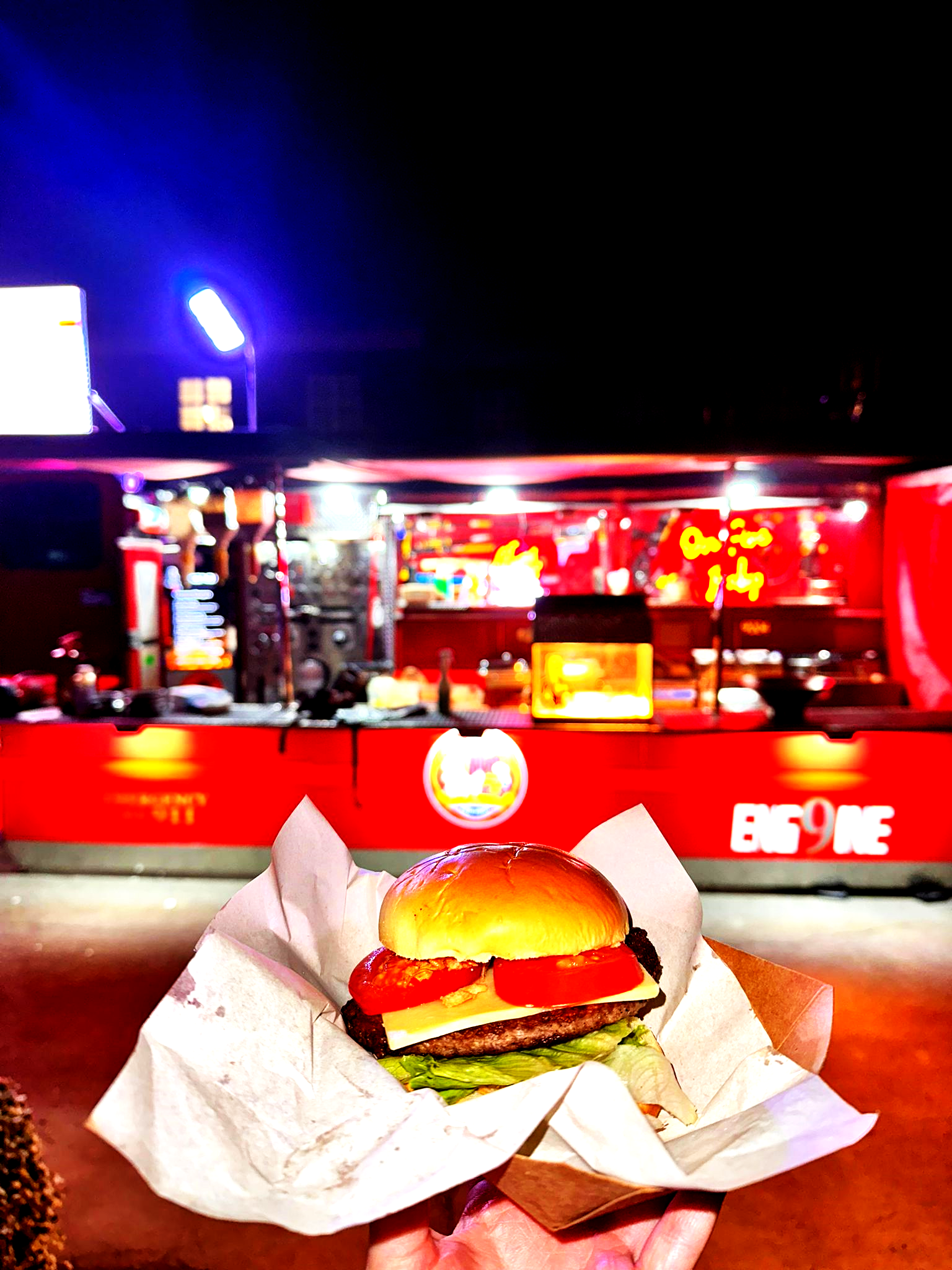
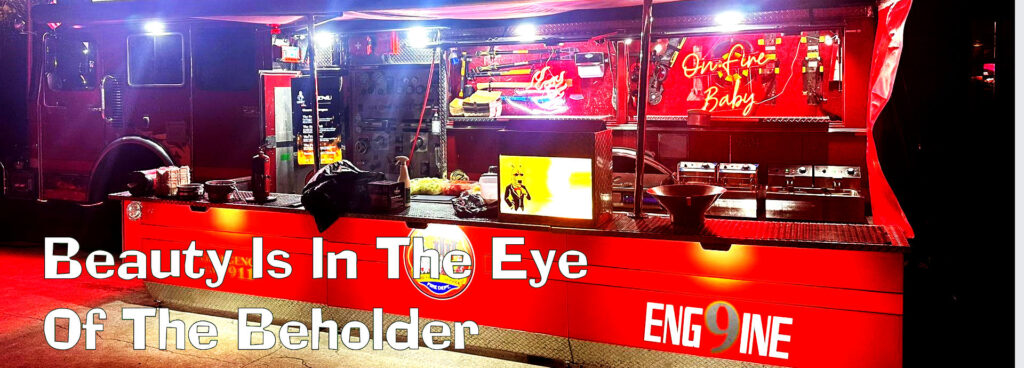
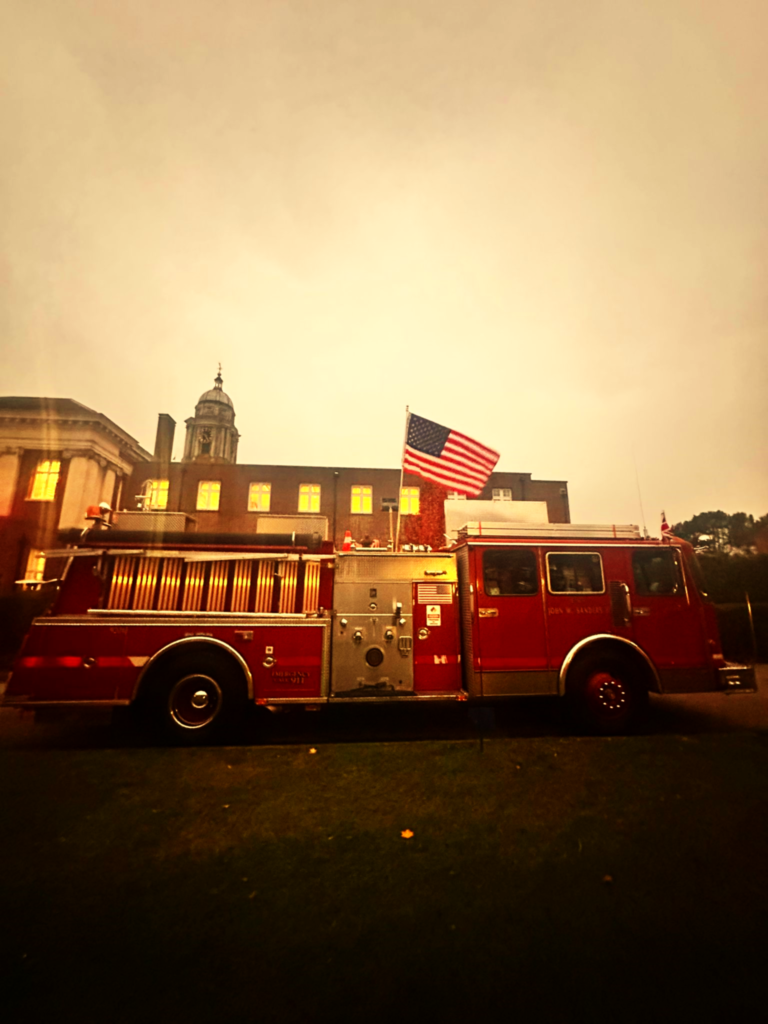
Although going at a sedate pace due to the amount of work we have, we have been carrying out some of the preparatory work on turning our imported American fire truck, into a food truck.
On Board Power
The food truck was intended to be self sufficient, and as part of this it was intended to have on board power. There are a number of cabinets on the truck, but all were a bit tight for space to install a generator with a decent power output.
Eventually we happened on a Yanmar 25kva unit. At 3000rpm it would be a bit noisy so we were gonna need to put a bit of work into sound proofing, but with a minor alteration to the mounting feet, it slid in the rear compartment like it was made to measure.
Rear CompartmentIn Situ
Noise
We acquired a noise meter to get a baseline reading, and at 1 metre we were experiencing an average of 105dB. Ouch!
We added a layer of Tecsound, intended to act as a barrier and also prevent noise transmission through the steel canopy. Then added some 50mm thick noise block sheet, which was basically around 40mm of high density foam, then a layer of lead, then a 6mm layer of foam to decouple the panel from the wall. To avoid blocking the end panel air flow too much we used a thinner 35mm version.
The reading after this was an average of 85dB, which sound being a logarithmic scale actually means we have cut the perceived noise level to around a quarter of what it started. Good, but we ideally want it down by another 10dB, or half again.
Most of the apparent noise appears to be coming from a combination of the top box housing the exhaust silencer and underneath the truck. The air intake and exhaust are actually underneath so these are basically open vents into the box.
Next Step
We have two more actions to try and solve this. First we are having baffled outlets made to cover both the inlet and outlet vents. A layer of soundproofing on the underneath of the cabinet floor would probably help as well.
Secondly we intend to box in the silencer with sound proofing.
Stay tuned for an update on where we get it too.
Adding the consumer trip unit and a changeover switch to the side access panel.Exhaust Outlet
To try and keep the truck looking like a fire engine, rather then a funfair truck, we have piped the exhaust from the generator to one of the water pipe outlets on the unit, it probably needs a removable elbow and vertical pipe fitting for when it is in use, as that will also cut the noise down, but on the road it looks stock.
As far as we can tell in the UK, this will be the first fire truck food truck, well, American fire truck, I have seen a British Green Goddess in use to serve food, and a couple of typical Dennis type engines.
An oldie, but a goodie. Established over 128 years ago, and claiming to have served the first hamburger in the US. Sadly we can’t verify this, as like most other competing claims, the truth is lost in the mists of time, but given its age, Louis Lunch was certainly amongst the first.
History
Louis Lassen, born in Denmark as Ludvig Lassen in 1865 married Sophia Kurtz, a native of the US. Lassen was a Blacksmith and some time preacher, who ended up selling food from a street cart. Over time he began to add lunch items to his cart. Well, we say cart, but wagon was probably a better description.
Legend has it that one day in 1900, a local businessman dashed into the lunch wagon, exclaiming “Loui, I’m in a rush, stick a meatpuck between two planks and step on it.” Lassen placed a burger puck between two slices of bread and sent the man on his way. Allegedly the first burger was born
In 1917 Lassen took over a building that had been a tannery and remained there until 1975, being forced to make way for development and moving two blocks to 263 Crown Street in New Haven.
The business is today owned by the fourth generation of the family.
Menu
Today the menu consists of ‘The Burger’ which is made from a blend of five cuts of steak then broiled vertically. Accompanied by potato salad, chips and homemade pie. They also use a cheese spread rather than slices.
The patties are broiled on a cast iron vertical gas broiler made in 1898 by the Bridge and Beach Co. and they use a 1929 Savory Radiant Gas Toaster.
Louis’ Lunch ‘It’s My Way Or No Way’
Louis Lunch is famous (Infamous perhaps) for its dislike of ketchup,. In fact asking for ketchup on your burger results in you being ejected from the premises. A no ketchup sign hangs prominently in the restaurant, along with a caption popping up to read “Yale students who try to sneak in ketchup are asked to leave”. The venue is all about the burger, and allows nothing to upstage or detract from it, so no fancy buns or condiments, you get onions, tomato and a squirt of cheese.
History has it that Ignacio “Nacho” Anaya was the first to create the nacho in 1943. Evidently he was the maitre d’ at the El Moderno restaurant in Piedras Negras. After the kitchen staff had left for the evening, a group of army wives from the nearby US military base at Fort Duncan came in looking for a snack.
Our quick thinking hero cut some tostadas into triangles and topped them with shredded cheese and jalapenos. They were a big hit receiving the name Nacho’s Specials.
Word quickly spread and they entered the culinary lexicon as ‘Nachos’.
We are in the middle of restoring a 30 odd year old American fire truck, and converting it into a food truck to add to our fleet.
Now, many of the parts we need for it are only available in the USA. Surprisingly much of the contstruction is no different now than it was 30 years ago, so most bits are readily available. I sourced some bits and bobs we needed and ordered them online. As is standard now they came with a tracking number.
USA to Local Delivery Depot 3625 Miles
There was a number of jumps to different depot’s in the States, before the parcel was finally loaded onto an airliner and flown to the UK, where it ended up at Rotherham our local delivery depot. This encompassed a trip of around 3625 miles, and took a grand total of 5 days. That averaged out to a speed of 30 mph. Obviously it spent some time sat in depots before being transhipped etc, but overall the average was 30 miles an hour.
Local Delivery Depot To Us 15 Miles
Where it goes tits up, is the final 15 miles from the local delivery depot to our depot. This is the grand total of 15 miles, and took the UK postal service 12 days to cover. The interesting fact here is that works out to around 1/20th of a mile per hour average speed. Or roughly 600 times slower than the US postal service.
In fact the really interesting fact is that a tortoise is capable of travelling at just over half a mile per hour. So had they strapped the parcel to the back of a tortoise, it could have been delivered in a little over a day and a quarter.
An isolated incident you might say. Sadly no, because so far we have repeated the whole scenario with similar times on another parcel from the States. Then we ordered some lights from Australia. A distance of over 9000 miles. The Aussies managed to get it to us in seven days. With the final leg from the post office taking 11 days!