A look at the top 6 festival rides in the UK. These tend to be bigger, faster and higher than the rides you would see at a regular funfair.
No.1 Giant Wheel
Most people have seen Ferris wheels at their local funfair. usually these are of the Eli Bridge type. An American built wheel that stands about 10 metres high, and can be set up fairly quickly. Great for local fairs and even 1 day events.
The ‘Continental Wheels’, however are bigger. Much bigger, 35 metres is a regular size, though there are some examples towering to around 80 metres that are transportable. The current worlds biggest is around 250 metres. Though that type are built in place and don’t tend to move.
No.2 Star Ride
Built by Zierer in Germany. There is currently only one example of this ride actually travelling. Owned by Danter Attractions this attends a number of festivals and major fairs. Sadly, being transported on four loads, with a crane required for set up and derig, it doesn’t tend to appear at local funfairs. It quite possibly would be usable for corporate events, however it would incur a massive costs so it would only be for the most prestigious of events.
No.3 Mouse Coaster
The next in our series of festival rides. These are a compact travelling version of the type of roller coaster you see at theme parks. With a spinning car and a compact set up you will see these at some of the larger fairs. Again a major set up compared to say a waltzer, needing a crane, a number of trailers and at least a couple of days.
No.4 Reverse Bungee
Also known as the slingshot. This uses bungee ropes to launch the spherical two person car to a height of 45 metres or so. Being a single trailer and a comparatively quick set up you are in with a chance of seeing this at some of the smaller fairs.
No.5 Booster
At a peak of 45 metres the booster is a high speed take on an old style ride called the dive bomber. That one was smaller but with a similar concept. Again you are in with a shot of seeing this at smaller events as it is a single trailer transport and another quick set up.
No.6 Starflyer
This one is available in a range of sizes. Some smaller rides are a regular sight at medium sizes funfairs. The largest examples upto 70 metre height are another festival/major fair attendee only.
Operating nationwide over the years we have provided attractions and services at a multitude of different events and venues. Some we visit once then never see again. Others we seem to turn up at regularly. Some we find to be awkward venues that we would rather not be at. Others like Bert’s Barrow quickly become favourites. Usually it’s down to the people in charge. They can make a venue welcoming, easy for us to operate at and make us want to return.
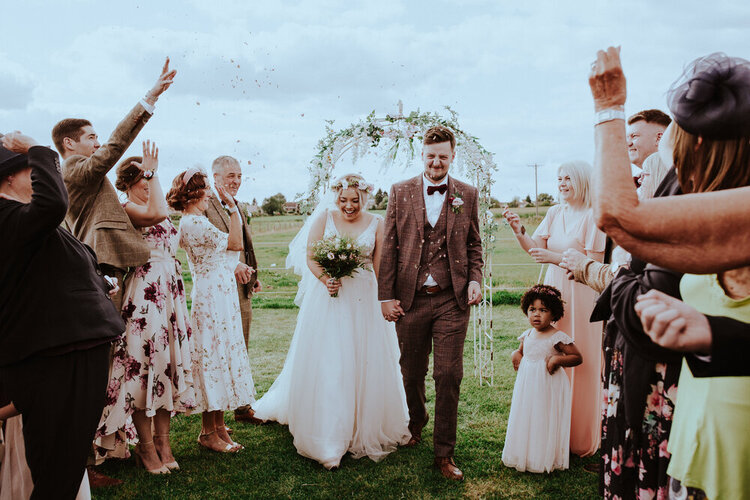
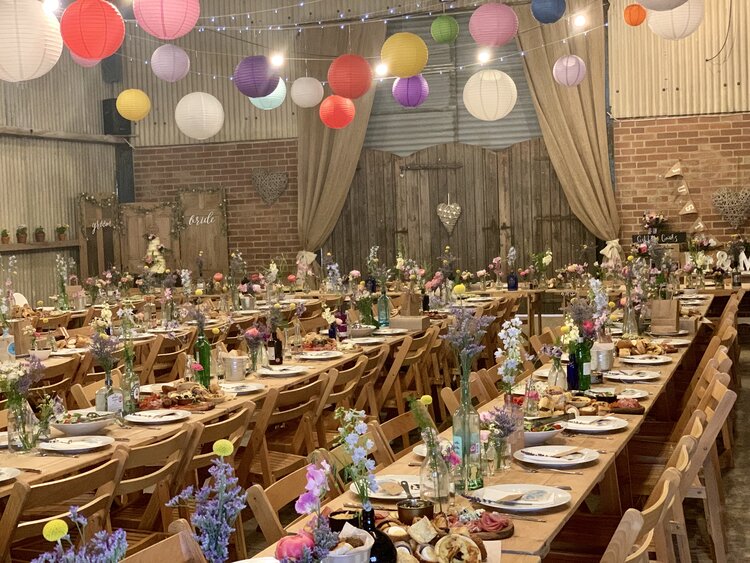
Bert’s is a family run farm, that has been turned into an events venue. Usable for smaller events such as weddings. Or equally lending itself to larger corporate events, with full funfair rides etc.
We have provided attractions for family fun days at a few events there and found Charlotte, Jason and the team to be accomodating and made the events just so easy for us. Definitely worth a look if you want to run a corporate function in the West Yorkshire area.
Pumpkin Time
They also offer a great time around Halloween when you can go picking your own pumpkins. Pet dogs? No probs, take them with you. With funfair rides and other attractions it makes a great day out for the family.
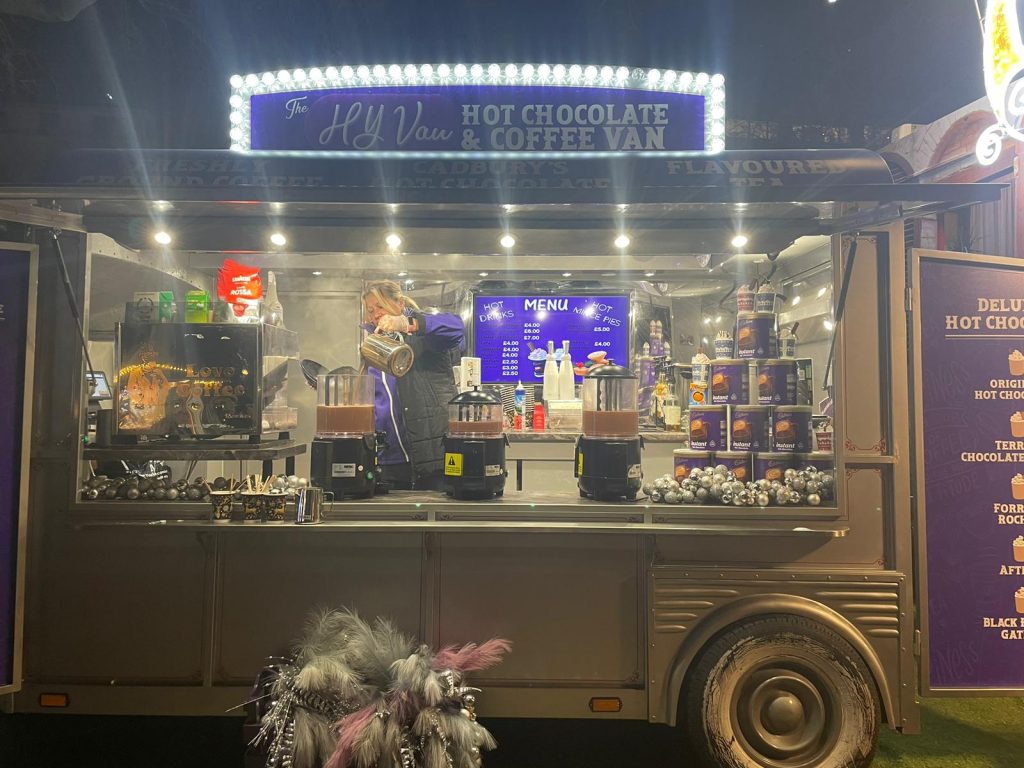
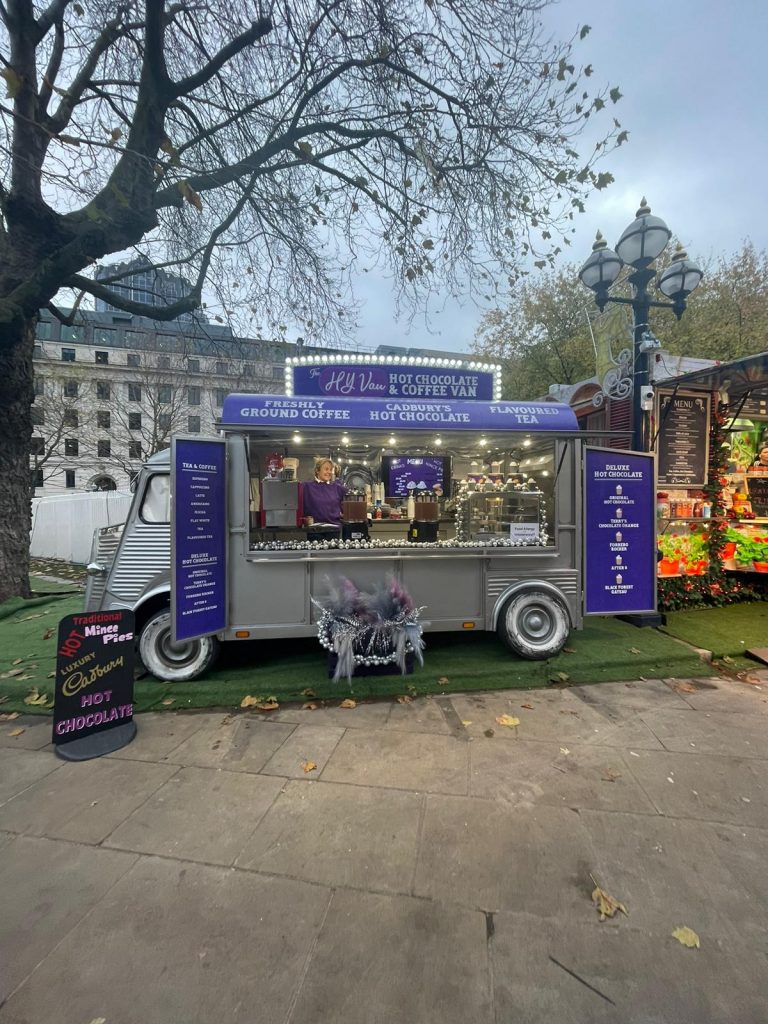
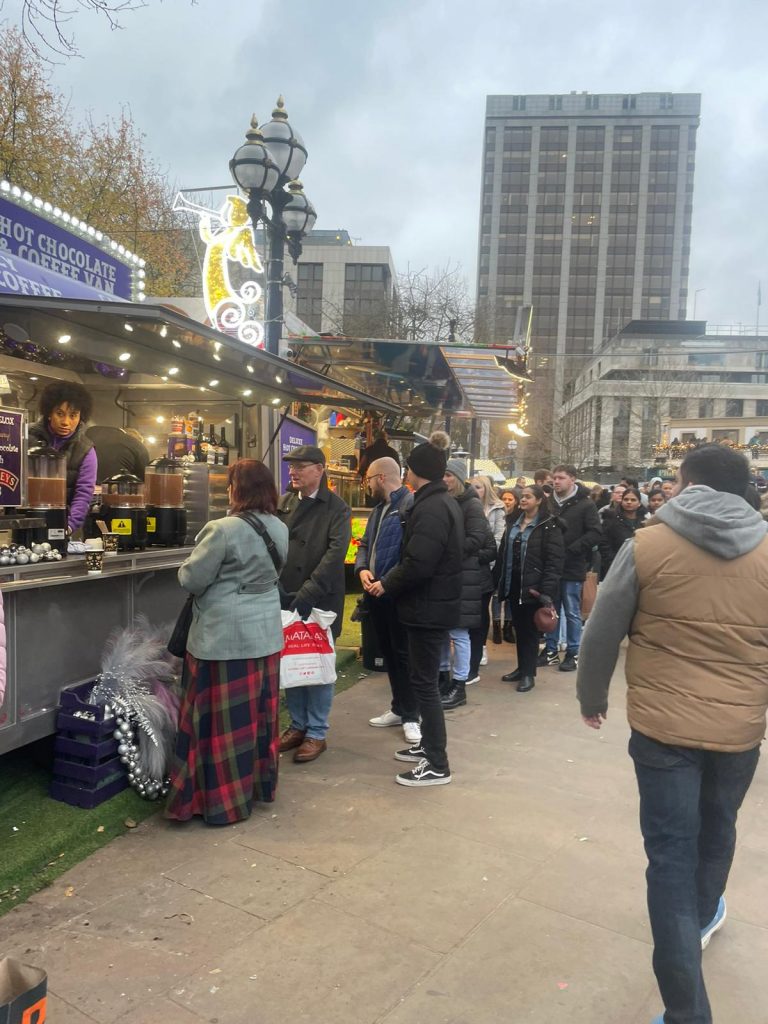
Normally we only carry out corporate events where the client has prepaid for our services. However one of the team fancied branching out this winter. As a result, our Citroen HY van was booked into the winter event in Birmingham christened ‘Christmas At The Cathedral.’ It was an extension to the long running Birmingham Christmas market.
Luxury Hot Chocolate
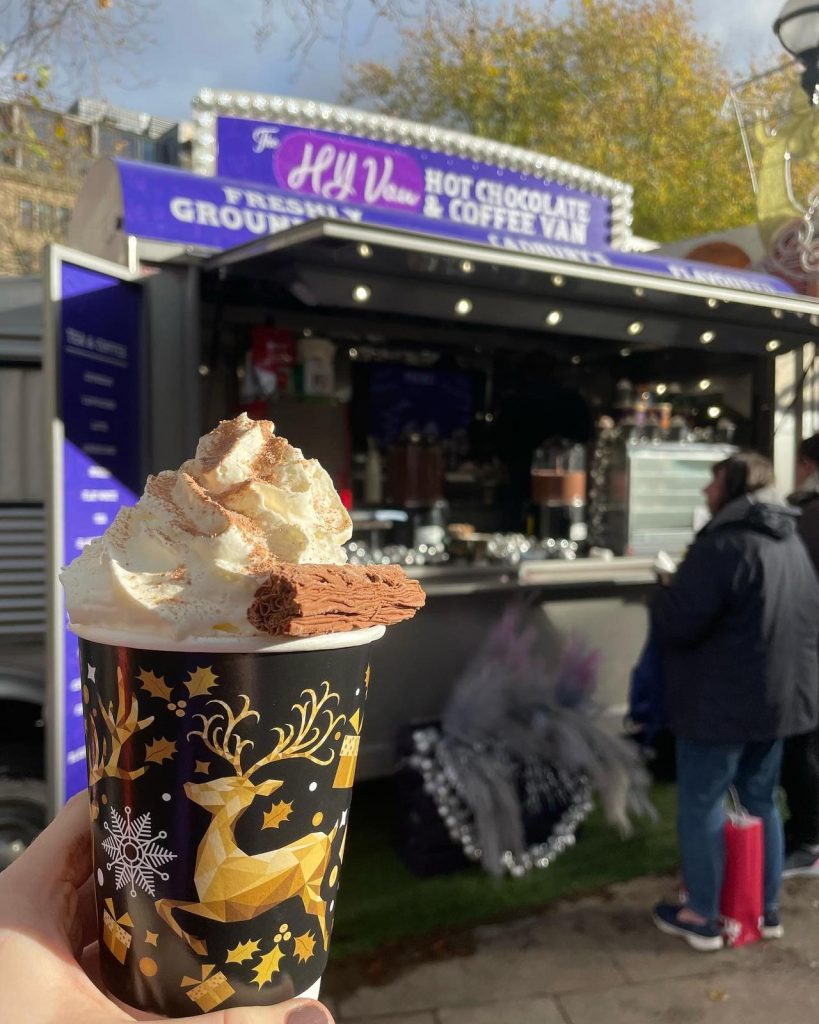
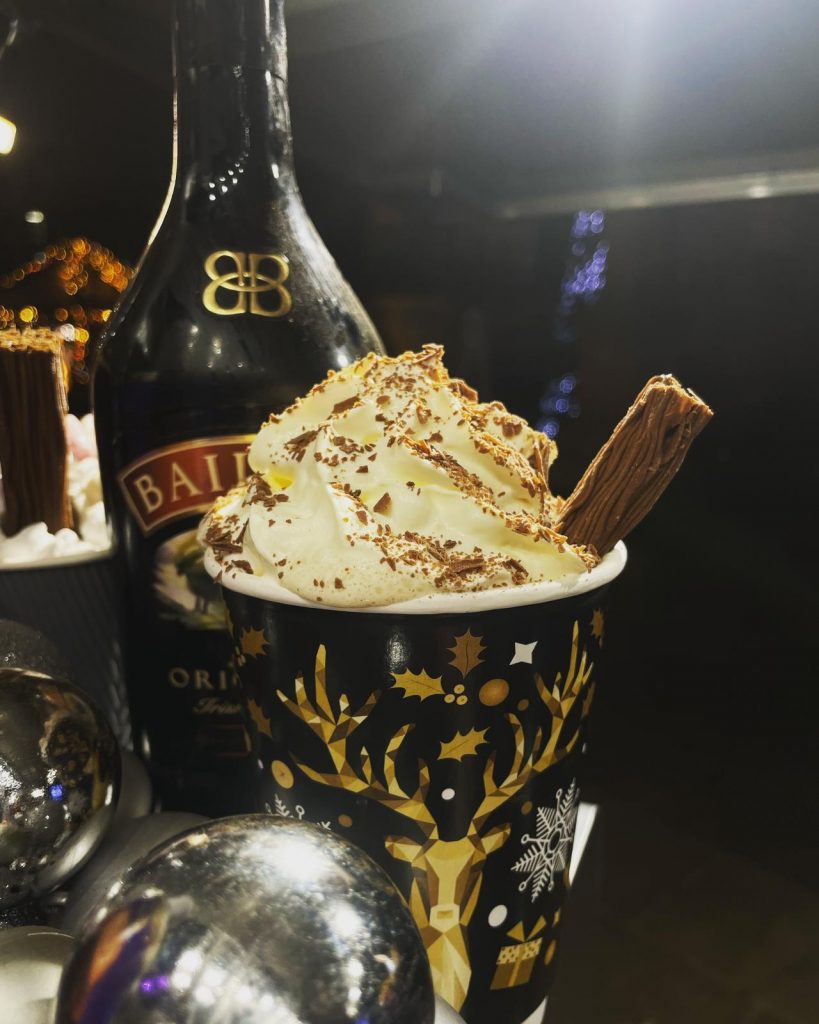
The van was set up to dispense luxury Cadbury’s hot chocolate. A variety of concoctions including Terry’s chocolate orange. After Eight mints, Ferrero Rocher and Black Forest gateau.
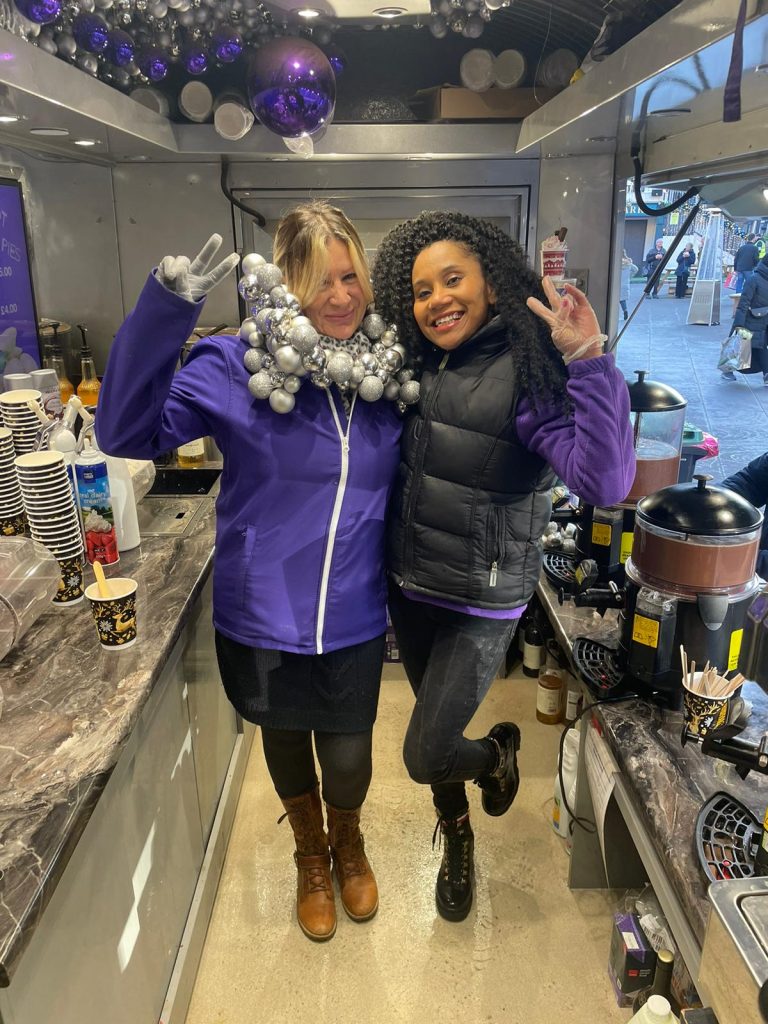
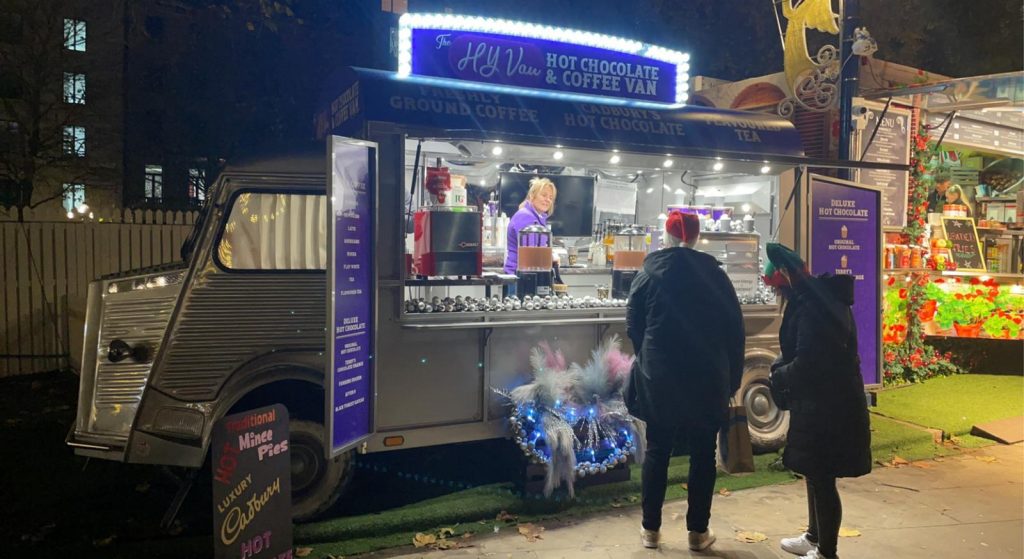
It turned out that the visitors to Birmingham were crying out for luxury hot chocolate’s. From opening to closing each day the van had a massive queue, and we ended up adding additional hot chocolate dispensers, and an autofill system for the boiler to keep up with demand.
The whole event was fabulously ran along professional lines, with a selection of craft huts rotating over the 5 weeks of the market. A selection of food vendors. Along with the Pigeon In The Park bar adding the finishing touches. Hundreds of thousands of visitors enjoyed the event over the 5 week run.
If you need to book a luxury hot chocolate service then check us out.
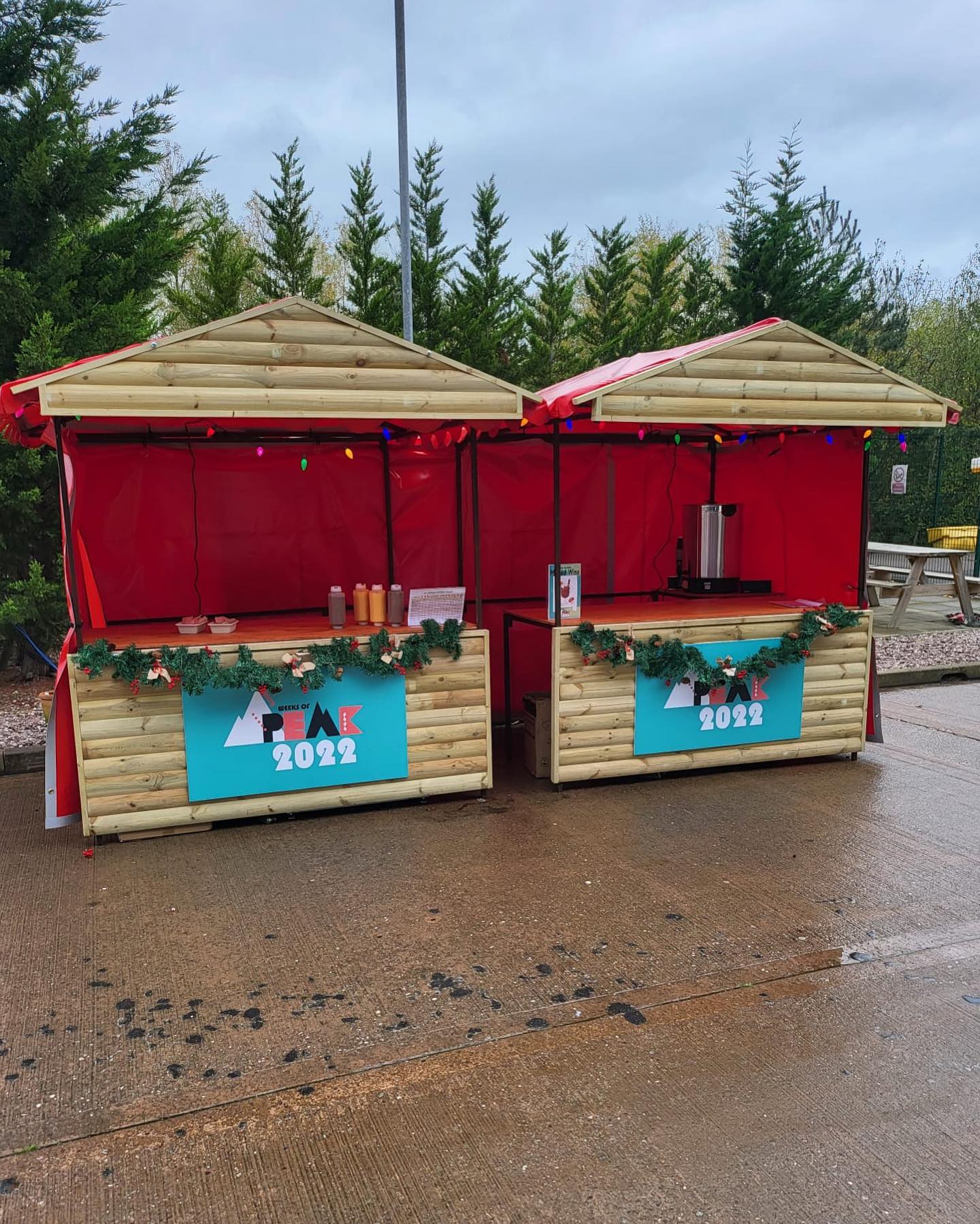
December is usually our busiest month, by quite a margin. This year it got even bigger. We picked up a contract with Amazon to provide their Peak Treats service.
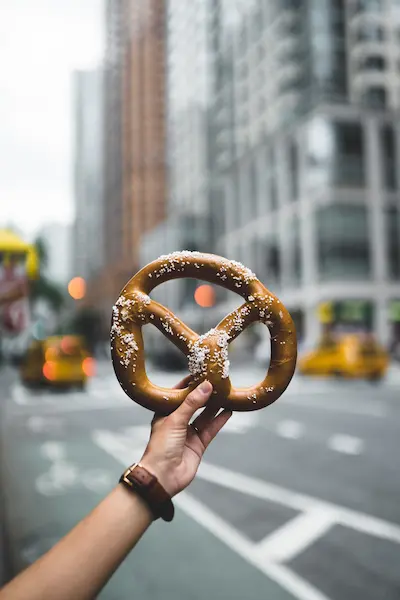
Basically it consisted of visiting 70 Amazon’s in 4 countries over 6 weeks, dispensing over 66000 Salted Pretzels and 15,000 litres of mulled wine (Non alcoholic sadly)
So how did it go. On the surface all serene and everyone happy.
Underneath, our usual paddling madly like ducks to make it look all serene.
Last Minute As Usual
We were notified that we had won the tender for the event. However we had to provide a sample of the food and drink for a company tasting. So obviously we didn’t want to start spending money on stock etc until after the tasting just in case it all went Pete Tong.
Happily they loved the items on the tasting and everything was finally signed off, 8 days before we were due to begin. This meant we have roughly a week to design and build 6 new mini Christmas huts for the job. To buy and take delivery of high capacity boilers and pretzel warming cabinets, new mains, obtain enough stock and and sort out freezer facilities for tens of thousands of pretzels.
Building The Stalls
Luckily the local fabricator we use was a bit quiet on the work front. So we nipped some spare steel we had up to him and talked him through fabricating the frame we needed. This took best part of a day. Fortunately the cover guy we had found was in the vicinity that afternoon so he called and measured up for the covers we needed and promised to have them ready for Sunday teatime (The job started Monday morning gulp).
A quick trip to the woodyard to have the counters made, and then the paint shop to pick up our new favourite product Raptor with which to coat the steel. Nigel promised to have all the steel work ready for mid week so things were on track. Our resident wood guy measured up for the wooden panels we needed and promised to have them by Sunday as well.
Pretzel Storage
We priced up a freezer trailer hire for the pretzels, but quickly worked out we could buy a second hand unit cheaper than hiring one, so that’s what we did. It was delivered about an hour before our first delivery of pretzels, so just in time, but hey, it was there. This proved to be a godsend. Not just for the pretzels, but a number of other jobs where we usually ended up disposing of stock, we suddenly found we had the storage capacity to keep it, so win win all around.
Stock
Pretzels
The pretzels came from a company we have used in the past who import them directly from Germany. The mulled wine was sourced initially from a localish company, which was handy, the problem was they only did them in bottles. So for the initial batch I ordered a thousand bottles. We went in one of our vans to collect the order. 2 pallets worth. The fork lift driver rubbed his beard, “Whats the payload of this van”.
“About a 1.2 tonne I think”, I replied.
“Ahh well 2 pallets is 1.2 tonne mate, and you too will take it a little over”
Oh FFS. “It’ll be OK, stick them in”
Only it wasn’t, once they were in the van towbar was touching the floor. Turns out that particular van was only a 1 tonne payload. We had to take one out and make another sodding trip. After that we sourced an alternative that came in 10 litre drums and was delivered direct to our yard.
Equipment
The equipment we sourced started out pretty well. And worked pretty well for about a fortnight. Then the warming cabinets started blowing the electric at random times. Turns out they have a design fault. The U shaped heating element in the bottom expands as it heats up. As it expands it rubs against the ide of the cabinet. Luckily it is insulated. Unluckily continued rubbing removes the insulation and then blows the electric. Quick work bending the ends of the element sorted that out.
Vans
I had all 3 of our vans serviced before we started thinking this would ensure everything was OK. Only true to form Murphy bit us twice.
On the very first day the van i was driving suddenly flashed up a warning that it was no longer charging the battery half way to the site at Rugeley. Now having owned Citroen Dispatches for a number of years I know that a failed alternator or snapped fan belt doesn’t damage the engine. I also knew from past experience that as the battery voltage dropped the van computer would start to shut systems down.
Sure enough ten mile from the destination, just as I hit twisty windy country roads, the electrically assisted power steering shut down. Followed by brake assistance, lights, indicators etc.
I actually got to the venue, pulled into the usual parking bay and applied the handbrake just as the engine shut down, phew.
Now the important thing was we had got there. Getting home should have been a problem, but one of our staff, Fred, had been late getting to work. So in temper he was told he was going to have to drive his own van and meet me at the job. So we had a spare van to tow me back.
The same sodding thing happened a week later with a totally different van. Only this time it was at Dunfermline in Scotland. This resulted in us having to call at Halfords and buy 2 new batteries so that we could keep changing them on the way home to keep the engine running.
FRED
Frank Spencer
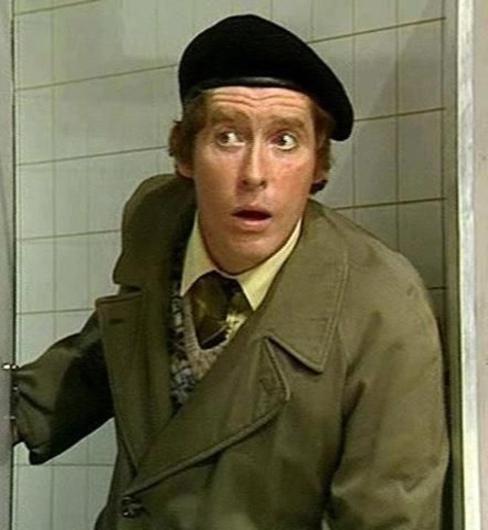
Mentioning Fred, one of our regular staff members, we have officially changed his name to Frank Spencer (If you are too young to remember Frank, check him out here) . He left a trail of destruction throughout the duration of the contract. including;
Putting the plastic chocolate sauce bottles in the electric pretzel oven to warm them up. Cue an aroma of melted chocolate and plastic!
Faffing about with the gel packs in one of our ethanol gel pretzel warmers, managing to set his hand on fire, shaking it to get the burning gel off, and successfully setting fire to one of the brand new covers on our Christmas huts.
Deciding to move the fully loaded pretzel ovens on a job and forgetting to plug them back into the electric. Resulting in a panic to get everything warmed up in time of opening.
Security
The only other real hiccup we had, was the fact that we would do an afternoon shift at Amazon, then go back for the evening shift. But for some reason, the night security never seemed to have been notified that we had been booked to do the job. Cue most evening trying to convince security to actually let us on site.
The new little vintage 2CV van we acquired is well on the way to becoming operational. We decided to theme it around being vintage. To this end we decided to acquire an age appropriate espresso machine. Now the initial idea of doing this excited me as some of the old espresso machines were works of art.
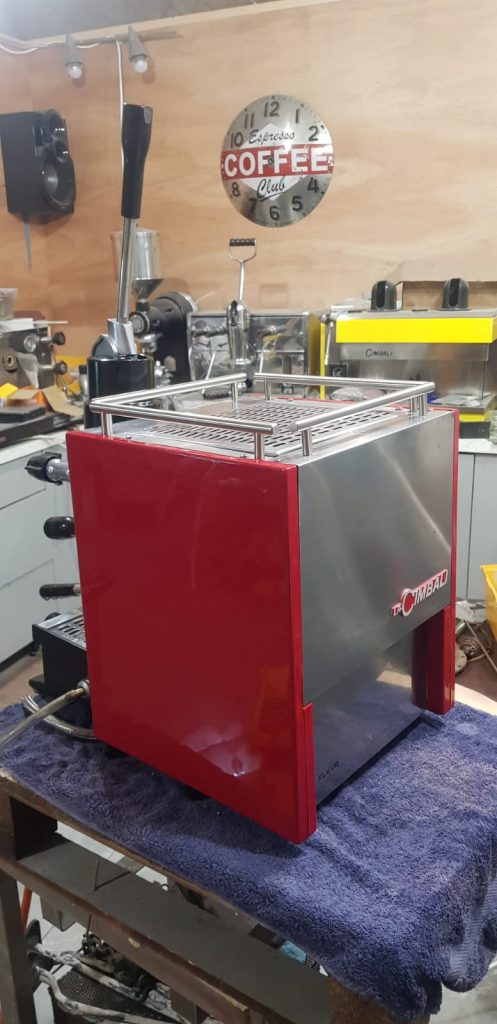
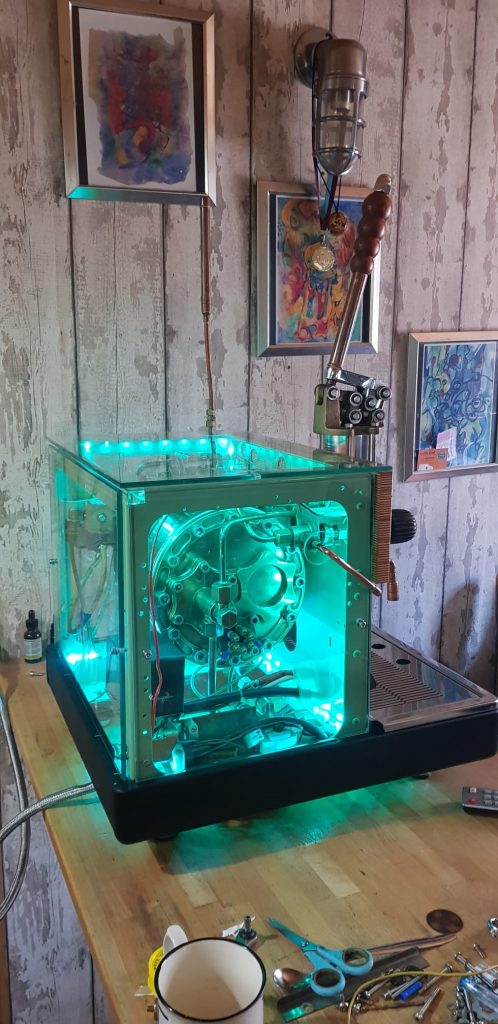
Unfortunately our van being early 80’s coincided with coffee machines following the design ethos of function not form. So the machine we eventually chose was an absolutely stunning design, that the company decided to wrap in a boring cube. We are looking at ways to tastefully expose the inner workings as they are too nice to leave hidden.
Our little machine is a La Cimbali Eleva. Built by a company based in Italy (well where would you go for an espresso machine, Russia?) La Cimbali started out in 1912 as a copper processing shop in the centre of Milan, before moving into the coffee machine market.
The Start
This was the state of the initial machine, we happened upon a guy in Accrington who restores vintage coffee machines. We visited him, and the beautiful machine I wanted to buy was vetoed by our new director of business direction who wanted something more in keeping with the van age. Bloody kids!
If the machine looked like this at the finish I would be happy, but as you will see it doesn’t.
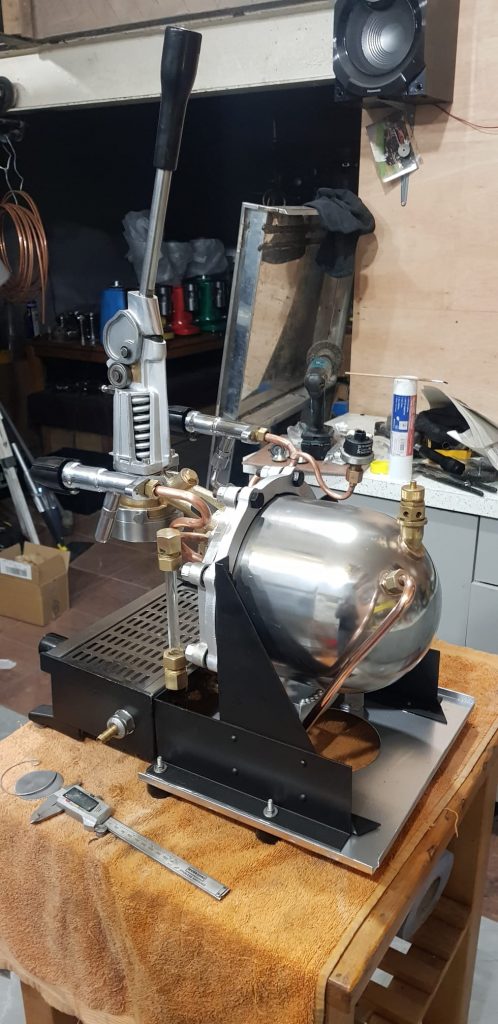
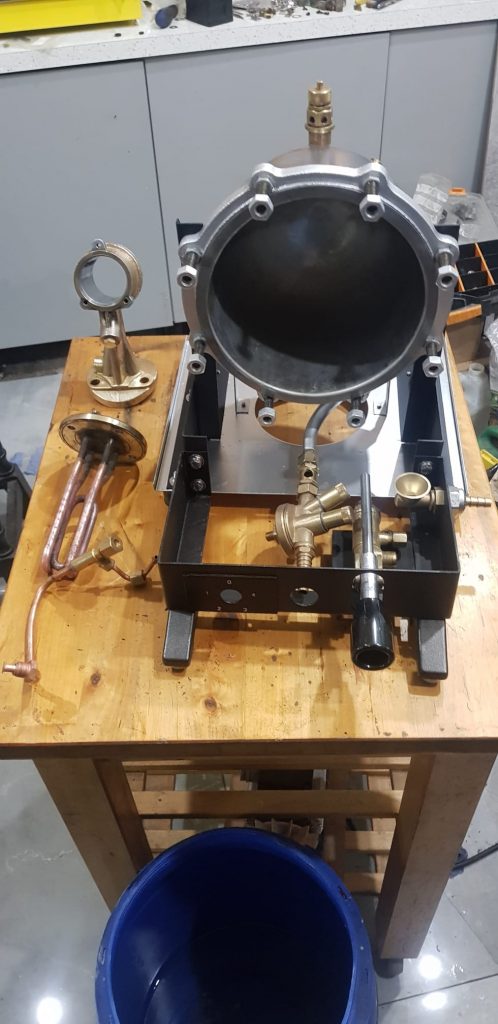
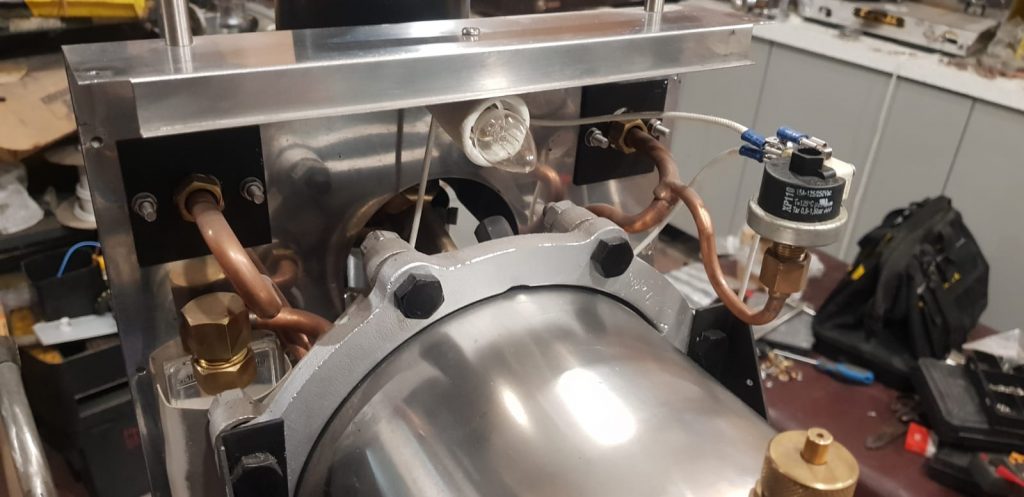
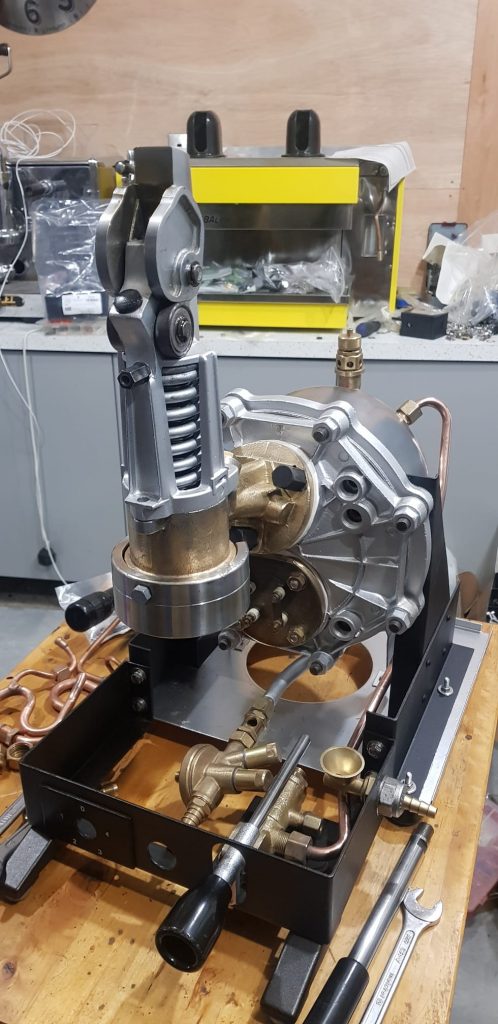
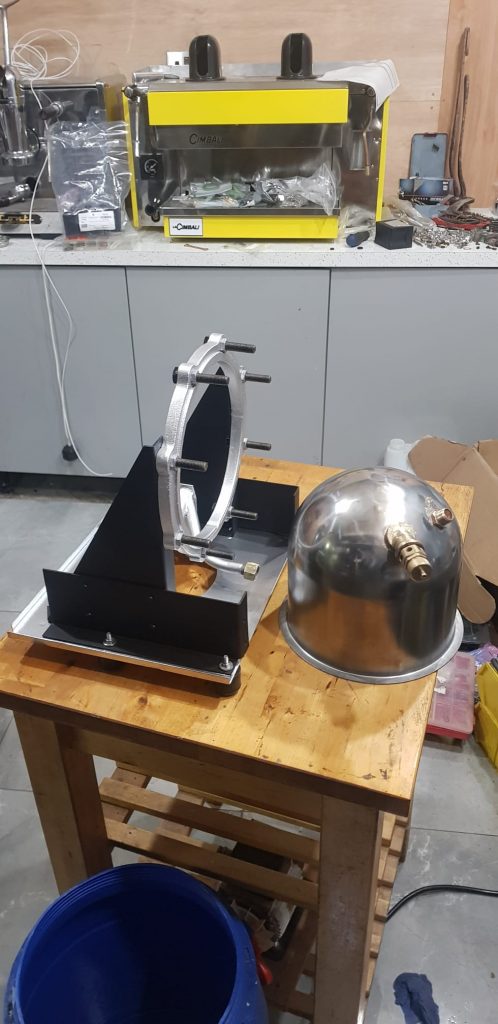
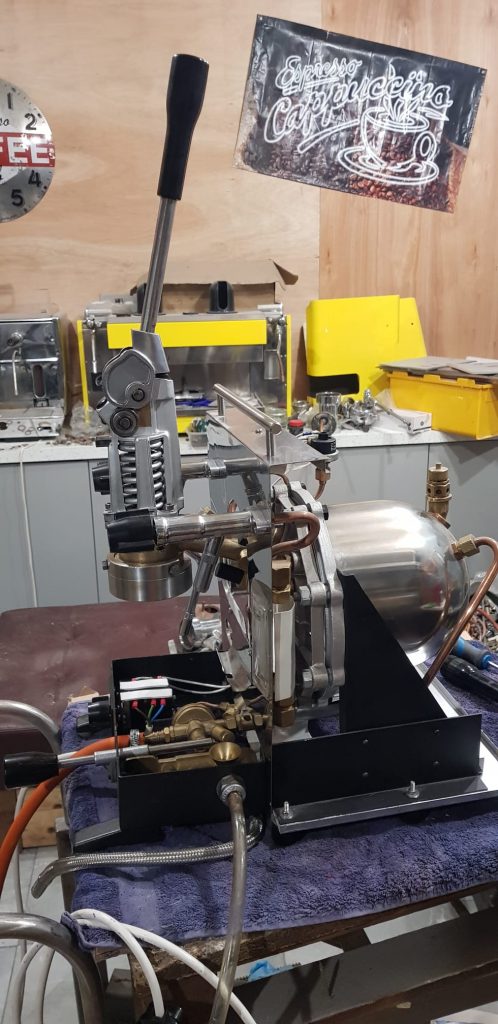
Various images of the complete trip down and refurbishment process.
Gas system
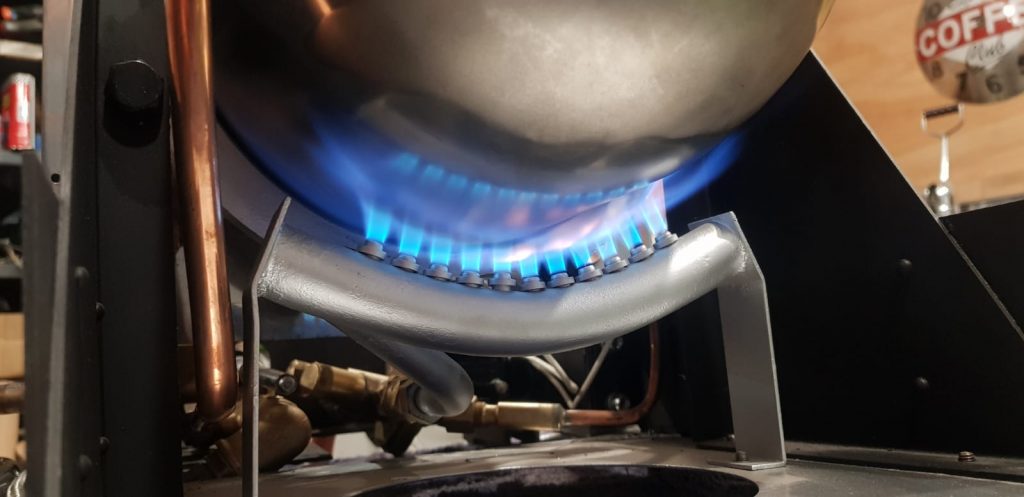
Oh did I mention that we also wanted a duel fuel machine to take care of those times when the client can’t provide an adequate power supply, pictured here being tested.
Coyote Ugly
Fully Clothed
And here it is with its godawful case added. A crime to cover those lovely internals up. I suppose being red and cubed it sort of fits the Citroen van quite well, I just think its cubist modernism isn’t a patch on the art deco look of its insides. Oh and notice the lever. Instead of pushing a button to activate a pump, this uses the original traditional lever extraction method. Hence the term, ‘To pull a shot.’
A Possible Answer
Glass Case
Just a thought that this might work. Though knowing some of our crew we would have a full time job replacing broken glass panels.
Anyway if you want to hire a coffee service, either our modern carts, or the vintage Citroen van with its vintage espresso machine then check it out here.