10 March is national popcorn lovers day in the UK. The legendary snack which is a mainstay of cinema’s the world over.
The earliest evidence of fossils in Peru suggests that humans have been popping corn since 4700B.C. Which must make it one of the oldest continuous snack foods in existence.
In the modern era they were popped on stoves, until the creation of Charles Cretors steam powered popcorn cart in 1880, which commercialised the process.
Cinema Popcorn
During the great depression, popcorn was so cheap that it became a massive seller. Indeed many farmers switched production to corn to take advantage of this. When WW2 rationing cut down on candy production, popcorn sales tripled. It’s initial introduction into movie theatres wasn’t welcomed by the owners, who felt it distracted from the films.
This changed however when they realised the profitability of it. The 1938 installation in to Dickinson’s theaters by the owner Glen W. Dickinson Sr. of popcorn machines led to the realisation that he could earn more from selling corn than tickets for the film. He eventually began buying up popcorn farms, and reduced the price of his tickets to get more people in to eat his corn.
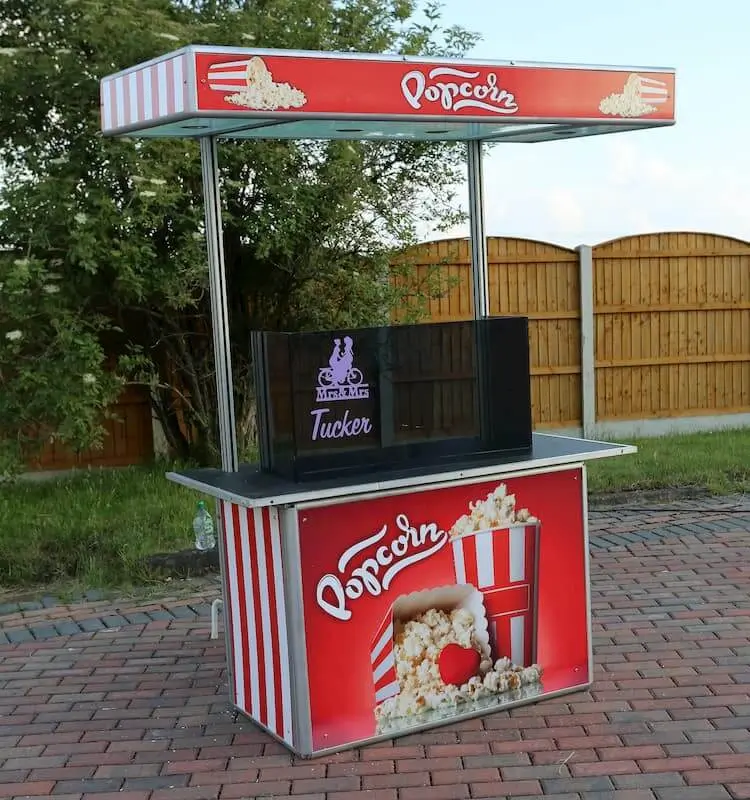
Popcorn Cart
Whether you like it sweet or salty, we can provide a fabulous popcorn service for any event. Happy popcorn lovers day.
In 1926 Hendrik op het Veld formed Veld Koning Machinefabriek (Veld Koning Machine Factory). This was abbreviated to Vekoma, and another legendary Dutch ride builder was created.
Only inline with many amusement ride manufacturers, it actually wasn’t. Originally it built farm equipment, and equipment for the mining industry.
After the 1956 closure of the Dutch mining industry, the company switched to producing pipework for the petrochemical industry.
1970’s And The Move Into The Entertainment Industry
The US based roller coaster manufacturer Arrow Dynamics contracted Vekoma to build the steel work for their European rides in the 70’s. As demand in Europe increased Vekoma eventually licensed the technology from Arrow and began building rides in their own right with 3 coasters being produced in 1979.
Named the Super Wirbel the first coaster was an inverted double corkscrew installed in Holiday Park, Hassloch Germany. Two of the first riders were the German Formula 1 drivers Rolf Stommelen and Harald Ertl , eventually they produced 7 examples. They went on the produce the Invertigo, Boomerang and Whirlwind coasters.
Alliance With Chance Morgan
In 2006 they formed an alliance with the USA based manufacturer Chance Morgan, with Chance building the steelwork for the coasters. They produced four in total during this period.
Acquisition Of Bussink Wheels Of Excellence
Vekoma acquired the Wheels of Excellence range from Ronald Bussink, whereby Bussink would continue to build the 100 metre wheels and Vekoma would build wheels in the smaller 40-80 metre market. They terminated the agreement with Chance in 2012, but licensed the R60 metre wheel to a new offshoot of chance called Chance American Wheels.
Madhouse And SkyShuttle
Vekoma also manufacture a couple of other attractions. The most curious in the aptly named mad house. Designed to give the riders the illusion of weightlessness and spinning upside down. In actuality, it is an updated version of the ‘Rib Tickler’, a ride that graced British fairgrounds in the 80’s, though never presented as well as the Vekoma version.
The other is the SkyShuttle. Raising riders upto 50 metres into the sky with a gently rotating gondola, the ride allows spectacular views over the full site.
Acquisition By Sensei Technologies
In 2018 Vekoma was acquired by Sansei Technologies a Japanese based company who specialises in both Amusement rides and elevators. The agreement was that Vekoma would continue to be run as a separate entity, so hopefully the brand will continue.
Dodgems are easily one the most popular funfair ride available to hire. There are some absolutely fabulous examples available. Unfortunately there are also some complete cowboys, operating complete garbage. Read our 6 tips on dodgem hire to avoid the junk.
There are 2 main types of dodgem rides, continental or traditional British style. Although the ride experience is essentially the same, they each have some unique strengths.
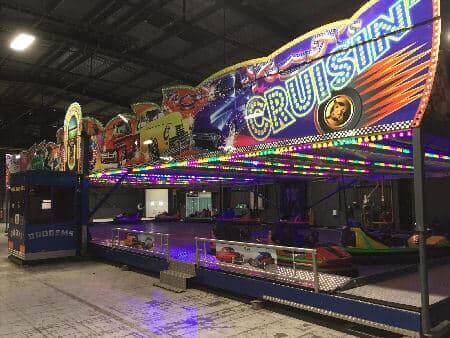
This type is the modern, slightly larger, ofton oblong shaped dodgem track. The ride essentially folds up on itself, and is then raised hydraulically off the floor allowing wheels to be fitted. The main advantage of this type is speed. Generally a smaller crew, can erect a continental dodgem in half the time of the traditional type. They also tend to be more highly decorated, with better sound systems and airbrushed artwork. The main drawback is the fact that they need to be driven into position. They cant be taken over a wall, through a narrow gate or up stairs.
Continental Dodgems For Hire
Traditional Dodgems
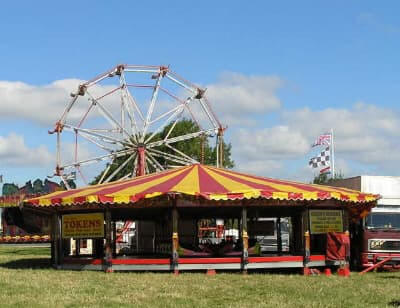
The traditional dodgem on the other hand, dismantles into small sections. It can be carried into almost any venue. The drawback with the ride, is the fact that it can take 6-8 hours to erect, as opposed to 3-4 hours for a continental type. Oh, and you tend to have to pay for all that extra work.
Traditional Dodgems For Hire
2 Find Out Exactly What You Are Getting
Most rides of either type, need 2 heavy goods vehicles (averaging around 7 m.p.g), a support vehicle. Generator, 4-6 staff. 2 days to set up, operate and dismantle. Insurance, maintenance and general running costs. All legitimate operators have these as fixed, unavoidable expenses. So when someone offers you a dodgem for half the price of everybody else, you should be suspect.
I know of 2 unscrupulous operators with the following deals;
The first would offer you dodgems for around £800. Less than half the going rate. You would book them thinking you are getting a super deal. When the dodgems arrive and erected, you find that they have no lights, no music, no rain cover and 4 dodgem cars. When you query this sorry state of affairs, you are shown a folder with a picture of the £800 dodgems in, which is what you’ve hired. The operator would then turn a page showing a picture of the £1000 dodgems, which is the same ride but with a rain cover added. This process would be repeated a page at a time, until the final picture showed a fully set up dodgems for around the £2200 mark. Your choice at this point is to go ahead with the rubbish you’ve hired. Or pony up another £1400 to get a proper specced set up.
The Second Deal
The second one was even worse. They guy would quote a super low price, but when you wanted to book you have to agree to fork up a £500 non refundable deposit. The day before your event, you are informed that the dodgems, sadly, have broken down, but don’t worry, you are going to be supplied with a simulator ride, or a Miami or similar. When you complain that’s not what you want and ask to cancel, you are told you don’t get your deposit back. Again your choice is to accept what you are offered, or start court proceedings Would you win? Most probably, but would the hassle and stress be worth it?
3 Agree Your Operating Times
This is a must, a standard time slot is around 6 hours opening. They also need to be consecutive hours. We had one client booked us for 6 hours and wanted 3 hours one day, and 3 2 days later. Sorry, but the price quoted wasn’t to cover the ride being tied up for an additional 2 days. You wouldn’t be able to do that when you hired a car, so why would you think you could in this scenario.
4 Agree Set Up Times
Usually dodgems are erected the evening before they are needed, and dismantled straight after the event. Depending on the work load, an operator may agree to leave them in situ when the event finishes and come back the next day. However don’t just presume this. Quite often we can be operating on a saturday night at one venue, and need to be in position at another Sunday morning.
5 Make Sure You Receive All The Safety Docs
Of all our 6 tips on dodgem hire, this one is the most important.
Currently a reputable operator should be able to supply as a minimum;
Public Liability Insurance Certificate Of At Least £5 Million
Risk Assessments
Method Statements
Daily Check Log Book
Adips Annual Inspection Certificate
The good operators will go farther and supply additional health and safety documentation. With regards to the ADIPS certificate, check it out at ADIPS.co.uk to ensure it is genuine. The advent of the scanner and photo shop means a young kid can alter the date or name on a certificate. Same goes for the insurance.
6 Ask For Testimonials
The best operators in the hire arena tend to specialise in these jobs exclusively. Some operators spend most of their time at traditional funfairs, and the private jobs are an afterthought. That’s not to say some of these aren’t quite good. They are, but the best operators tend to pay more attention to customer service, and operate to a higher standard. By all means ask for contact names at some of the larger corporate clients they have had. A good operator should have no issue with sending you details of jobs they have done.
If after reading our 6 tips on dodgem hire you are still unsure, by all means drop us an email asking for help.
When it comes to rides, you really need to hire funfair dodgems. Nothing comes close for fun, and it is equally suitable for younger kids, as well as grandparents. Over time we have been asked many questions regarding dodgem hire, so we are listing a few of the most common here.
Yes, they are a ride that most everyone loves, from kids through to the elderly, they are a definite hit at weddings.
How big are they?
They range in size from smaller version of the traditional English type track at around 50ft by 50ft. To the larger continental tracks at 75ft by 55ft. There has been an occasional track upto 100ft in length, but these tend to be far too much work for most short events.
How much do they cost?
It is impossible to give a definite answer because it depends on which type of track, where in the UK, when the event is etc. Roughly they will be between £1600 and £2500
How long do they take to set up?
The older build up tracks can be upto around 8 hours. Some of the more modern tracks have been built for high speed set up and can be as little as 3 hours.
Do they come with music.
Yes all of our tracks have music, lights and a top cover for use in the rain.
Can they be set up indoors.
If the access doors are large enough then the continental tracks can be driven into position and set up. If not it may still be possible to use the traditional type track as they are supplied in small sections, however it will increase the set up costs.
Are they safe.
Very, all our rides undergo an annual inspection from an independent engineer, a bit like a cars MOT. This results in it being issued with an ADIPS certificate certifying that it meets relevant safety standards both electrically and mechanically. This can be checked on ADIPS website. Additionally each ride must maintain a daily inspection record for each day it is in operation.
Do they have to have loud music blaring out.
No, of course not. On a traditional fairground, every ride is competing with every other ride. So they are all trying to outdo each other. When you hire for a private event, you can have the music as loud or as quiet as you wish. Or even turned off. Want a personalised play list, no probs, just ask.
These are the most common questions. If you have any additional enquiries, leave a comment and we will add them to the list.
Hire funfair dodgems for the most fun at an event.
I think its perfectly reasonable for anyone to ask ‘Are Fairgrounds Safe’. Modern rides are higher, faster and far more thrilling than the staid ferris wheel and dodgems of yesteryear. But does this make them unsafe?
Add to this a far more comprehensive annual testing regime, and stricter health and safety enforcement and you have a vast improvement in place.
Modern rides not only have the benefit of far better material quality, they also have computerised safety systems to monitor everything, and we have a far better understanding of things like metal fatigue etc.
The Human Factor
There is one final piece of the puzzle though that is much harder to crack. That is the human factor. The vast majority of operators are perfectly professional, with H&S at the front of their minds everytime they operate. Sadly, like any other industry in the UK, if not the world, there are occasional cowboys.
Miss an inspection here, or disable a wind meter so you can keep going when its blowing a bit. 999 times out of a 1000 nothing happens. Its that rare combination of factors that coincide to create an accident that catches them out.
I fly light aircraft for fun. When I started I studied every accident report I could get my hands on, my theory being I would rather learn from someone else’s mistake than my own.
Experts who have made a career investigating accidents in aviation, state that on average there are seven steps that line up before an aircraft has an accident. The pilot may be an unsafe one, but has got away with it in the past because all seven steps haven’t happened together. Its a bit like swiss cheese, all the holes have to line up before things go wrong.
The other major human factor are the customers. No amount of warning signs, safety belts etc are enough to stop some people. They seem infected with the lemming gene, and are determined to remove themselves from the gene pool. Are fairgrounds safe, perhaps should read are people safe to be allowed on a fairground.
When It All Goes Wrong
A long time ago, when I was still a kid, I remember a fatal accident on a fairground we were at. The ride was what we refer to as swinging gyms. Basically they are a large cage that 4 people enter. By rocking the cage backwards and forwards, they build enough momentum up to go over the top as it were.
Now this particular day, a guy decided that he was going to assist his friends from the outside. He climbed the 6ft safety fence around the perimeter of the ride. And ran to push the cage. Sadly, he tripped and fell face down on the platform as the cage was in the air. As it descended it landed on him and crushed him. His family won’t feel that fairgrounds are safe. But was that the fairgrounds fault.
Is that a genuine accident. The ride had been tested and find to be perfectly safe within H&S guidelines. Indeed it was retested immediately after the accident and passed again. It was surrounded by a 6ft tall fence, not something you could just hop over, it took effort to get over it. There were plenty of warning signs about. Yet a young man still managed to put himself in that awful situation. So what more could have been done to stop him?
I regularly see parent with young children on a fairground, who get talking to their friends then allow their kids to wander about unsupervised. You wouldn’t do this in a factory with machinery, or on the edge of a busy road, so please don’t do it on a funfair. Similarly height restrictions on rides are there for a reason, the amount of arguments we have had with parents, because there child is a couple of inches shorter than the safety height and they want them to be allowed on is frightening. Why would you intentionally want to put your child at risk.
How Can You Check
From the point of view of finding out if a ride is safe. All professional rides currently fall under the ADIPS scheme. This is the Amusement Device Inspection Procedure Scheme. Basically it is like an annual MOT for a ride. It covers electrical and mechanical safety. It includes non destructive testing for cracks in the metalwork. Electrical safety checks, checks that barriers and safety devices are fit for purpose.
If you are hiring a ride, ask for the ADIPS paperwork. This should contain an image of the ride in the top right hand corner. Along with a registration number.
You can contact ADIPS via their website to check that a rides test number is valid, and if there are any previous safety related issues.
Similarly any respectable ride operator will have £10 million public liability insurance. If you ask them are fairgrounds safe, they should not take offence and be quite happy to tell you of the steps they take to ensure this.
Perhaps we should look at the Health and Safety Executives own opinion when asked are fairground safe. They have stated in the past that you are far more likely to be injured on the way to the fair, than you are once you get there.