Category: General

Catering, Event Planning, Fun Story, General

Crazy Catering Units From Around The World

25 June 2021

At one time, catering units, be they on the fairgrounds or at private events, tended to be basically a box. Nowadays however there are some really crazy catering units available, so that not only are you getting great food, you also get a centrepiece for your event.

We are going to take a look at some of the craziness out there, ranging from pizza’s being dispensed by fire engines, to something that looks like its driven straight off the set of Mad Max.

MAXImus MiniMUS

This is definitely one of our favourites. Resembling some post apocalyptic street food vendor that wouldn’t look out of placing serving a burger to Mad Max himself. Build to resemble a pig, with a snout and ears, it was built in 2009 for Kurt Beecher Dammeier, it took its name from the two ranges of food it served, one with a heavy sauce (MAXImus) and a lighter range (MiniMUS). Sadly from what we can see it appears to have closed down in 2017

Baby’s Badass Burgers

We love this concept, though with the way things seem to be going we are surprised it hasn’t been protested. Set up by an ex restaurateur and an event planner, this has a definite attractive lady vibe. With burger names such as Cover Girl, The Other Woman, She’s Smoking and The Good Wife, and Burger ‘Babes’ (attractive female serving staff), to spread the burger goodness. The company now has a number of franchised operations outside of it’s home of Los Angeles, so obviously it works well.

Snog Yoghurt

A natural frozen yoghurt dessert, sweetened with agave nectar and under 140 calories. What’s not to like. So when you need your first mobile store what immediately springs to mind. It’s obvious isn’t it, an ex London A.E.C. Routemaster bus. Built by a company specialising in luxury bus conversions, the original Snog bus opened in London’s Southbank in 2014.

Military Pizza Truck

Built into a 6 wheel drive, ex military truck, this is another candidate for catering in the Mad Max era. This one is kitted out as a pizza truck, but maintains it’s military colour scheme and feel. It’s also available for pretzels, popcorn and various other dessert options.

Space Shuttle Cafe

This one is an extreme conversion. TBH, I can’t see you getting this past the DVLA in this country. It is built to resemble the space shuttle, but it’s not a converted commercial vehicle as you would expect, no sir, this one is an actual Douglas DC-3 airplane fuselage, that has been fitted with running gear and an engine. It has a commercial kitchen and rest room built in.

Pizza Fire Engine

This is one of our favourites, so much so that we are actually carrying out a feasibility study to see if it’s something we can emulate for our own range of catering options. There are a number of versions plying their catering trade, including a couple of examples in good old Blighty. We particularly like the Company 77 effort, with a working water cannon (good for keeping the queue in order) and a photo booth built into the jump seat.

Airstream Catering Units

Originally built as caravans designed in America in the 1930’s. The sleek shape and highly polished aluminium finish is unmistakable. A number of companies make similar models, but Airstream is the oldest. For decades NASA used a modified Airstream trailer to transport astronauts to the launch pad. They have become increasingly popular for use as catering units both in the States and Europe.

Westport Flea Market Burger Van

Not strictly a burger van, this is more of a promotional item to advertise the Flea market Bar and Grill. But we included it just because of the sheer quirkiness, and the work that has gone into it.

Snowcat Burritos

If you happen to be skiing in the Mammoth Mountain Ski Area, in Sierra Navada, and you are hungry. Then you are in luck, as they have a burrita stall built into an actual snowcat. Well, they actually have two, one serving burritos and the other Calzones. They are also planning to add churros with strawberries and cream.

Keep checking back as we will add more examples as we come across them.
General

Maserati Quattroporte, Sometimes You Need To Treat Yourself

21 June 2021

Over the years I have owned some crap cars. I remember a little Nissan Cherry, it wasn’t actually mine, my dad bought it as a second car, but it was that clapped out that my mam wouldn’t travel in it, so I sort of got left to use it at will. It ended up being in a 6 car pile up near the Metro Centre in the North East, so that was that.

Gradually over time, as business got better I ended up with a Jaguar X-type estate. I loved that car, but Ian, one of our event managers blew the engine up when I lent him it to go to London to see his girlfriend. Funnily enough he also blew the engine up in our mini camper van, and one of the London taxi cabs.

Dream Car

Over the years I always had a hankering for a Maserati Quattroporte. I think it is one of the most beautiful saloon cars ever made. The fact that it is a true four door 5 seater makes it an ideal family car, and the 440HP engine, limited slip diff and active suspension means it can hold its head up with many a performance car.

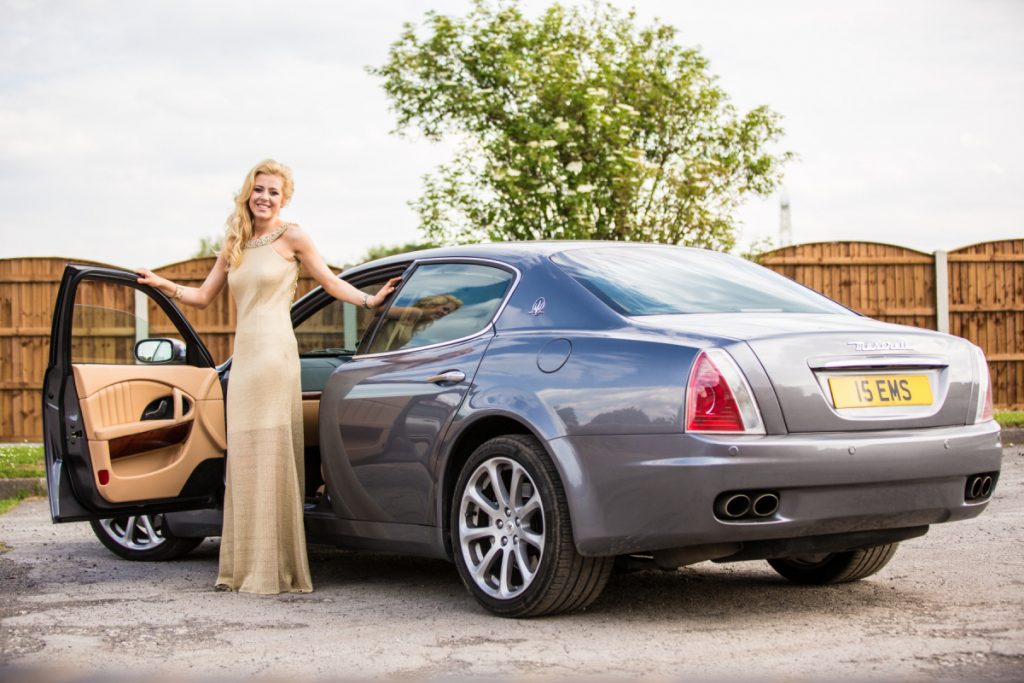
Eventually my wife got sick of me nagging about wanting one, and I convinced her we could also hire it out as a wedding car, so eventually she gave in and we acquired a gun metal grey version with black and cream leather interior. It was the executive version, with massaging, heated, cooled rear seats that also reclined. A nice touch, but to be honest one I never took advantage of as I always drove.

Maserati Quattroporte

I owned that car for three years and loved it as much at the end of them as I did at the beginning.

Now, my wife isn’t one to swap a car in that is running OK, so imagine my surprise when she announced one day, “I think you should go and look for a new Maserati”. I was worried she had suffered an unnoticed anurism or was having a breakdown but she seemed fine. Looking back I had just received my pilots licence, so I think now, it was me mentioning I fancied a share in a small Cessna aeroplane, that got her thinking once I swapped my car in, it was an excuse to put me off an aeroplane for a few years.

Quattroporte 2

I ended up speccing the new model Quattroporte in Nero black with full black leather interior. It seemed a good idea at the time. The colour is absolutely fabulous, deep black, with large flecks of colour. When the sun hits it, it looks sublime. Unfortunately you would need to be cleaning it 24/7 to keep it looking that way. I have spent hours washing and polishing it to a gleam. Withing 30 seconds of hitting the road it looks like its been neglected for months.

For anyone thinking of buying their dream car all I can say is do it. Mine is totally impractical. I have had it as low as 3 m.p.g. on twisty roads with my foot down. Heck it will pass anything on the road except a fuel station. Things like tyres and consumables are an arm and a leg. And last about half as long as any other car I have owned. It is so big it doesn’t fit in parking bays. My wife hates it. But I don’t care, once I get in, fire it up and push the sports mode button, the engine roars. Sounding like a symphony of angels, floor the accelerator and it pushes you back in your seat, and all is right with the world.

Maserati Quattroporte Wiki

Event Planning, Fun Story, funfair events, Funfair Rides, General

Eli Bridge, A Manufacturer Profile

28 February 2021

Next up in our ongoing series of amusement ride manufacturer profiles, is the long established American company of Eli Bridge.

The founder W.E. Sullivan visited the original Ferris Wheel at the Columbian Exposition in 1893. He (like George Washington Gale Ferris) owned a bridge building company. After his ride he became fascinated by the ride and decided to build one of his own. In collaboration with the machinist James H Clements they began construction of their own wheel.

This debuted in Jacksonville’s Central Park and was called the Big Eli Wheel. The ride was a success and Sullivan set up a company to manufacture his wheels.

Their first wheels were powered by 6h.p. huber steam engines and came in two sizes, 45ft portable models and 50ft park based designs. There was also a 55ft ‘Aristocrat’ model.

The company was originally located in Roodhouse, Illinois, next to a railway track, allowing for easy distribution around the country. In 1919 a new purpose built building was erected in Jacksonville, also next to the railroad. The company has been there ever since. It’s 76,000 sq ft facility contains a room tall enough to erect a big wheel in.

Modern Eli Bridge Wheels

The company still produces wheels to this day. A modern Eli Bridge, is, truth told, little changed from the earlier models. Sure, there is no doubt the construction will use moderner materials and methods. But the look and feel of the ride definitely contains the same DNA. That isn’t meant as a criticism. The fact is the early formula worked well, and still works well, so why change it?

One major change is the drive system. For generations, the wheel used a wire rope, that passed through a pulley which was rotated by an electric motor. The system worked fine, and still does as hundreds of wheels around the world continue its use. It did however have a couple of disadvantages. The rope gradually stretched, and as it did the drive began to slip. Murphy’s law would dictate this happened just as you got busy. The other failure was when the rope snapped. A sensible operator would keep a spare, and could change it relatively quickly, but it is still inconvenient and would lose you revenue.

Rim Drive

To counter the wire rope issues, the company has now switched to rim drive systems. This works by attaching a flat rim to one side of the ride. An electrically driven wheel would contact the rim and as it rotated, would rotate the ride. No slipping or snapping and a much more precise regulation of the speed available from a modern inverter driven control system.

Scrambler A New Chapter

1955 brought a new chapter for the company, with the launch of its Scrambler ride, the first non wheel addition to its portfolio. Known over here as a ‘Twist’ the ride took the American amusement industry by storm, and is still prevalent at funfairs around the world today, albeit in many versions from many different manufacturers.

Other Products

They also sell a couple of children’s rides, including the quirky Spider Mania, to which I can’t really find a comparable ride in the UK.

A line of fire pits for camping expeditions and Boy Scout troops round off the companies product list.

. One quirky fact is that the word Bridge was deliberately left in the company name, so that they could still build bridges, their original business model. Though records indicate that since they started selling wheels, they have only actually built one bridge.

Check out our profile of Fabbri the Italian manufacturer.

Fun Story, Funfair Rides, General

Power Generators And The Decline Of British Industry

20 February 2021

With funfairs being a travelling industry, it’s fairly obvious that rides and such like cannot be connected to a fixed electricity supply. The answer is portable generators.

In the very early days, these tended to be steam powered. The traction engines used to transport the rides could have the drive belts disconnected and switched to dynamo’s to provide the 110v direct current supply used at the time.

As things progressed, and diesel powered lorries took over from the steam engines. A similar system was put into place. The drive shaft from the gearbox to the driving axle on the vehicle could be disconnected. A pulley was then attached to the output of the gearbox and drive belts used to drive a dynamo. With progress, the power source slowly began to gravitate towards 240v alternating current, same as powers a house.

I am 50, and can just barely remember helping my dad ‘drop the shaft’. Basically this was disconnecting the propshaft, dropping it to the ground and connecting the drive belts, a ritual at every fairground.

The ultimate evolution was the switch to dedicated generators. A totally separate engine and alternator or dynamo, or sometimes both piggy backed. These tended to have a more regulated speed control designed to keep the engine running at optimum speed for power generation.

Gardner Engines

A British manufactured engine rapidly became a firm favourite to build power generators. Built by a Manchester based firm called L.Gardner & Sons.

Originally a sewing machine maker, they moved into gas engines around 1895, then into the new fangled diesel engines in 1903. Their initial engines tended to be for marine use. In 1929 they fitted an engine into a Lancia bus. This was such a success that they ended up introducing a new range titled LW, geared towards on road use.

Gradually they grew to provide power for many of the existing lorry manufacturers throughout the UK, and also licensed the design to Dutch manufacturer Kremhout, Belgian makers FN and Miesse and French manufacturers Bernard and Latil . A larger range was introduced to power diesel locomotives, and things were good for the company as they became the world’s leading exporter of diesel engines.

A number of things were noticeable about their designs. Their thermal efficiency (how much energy was converted to actual power output as opposed to heat) was a shade over 40%. To put this into perspective, state of the art computer controlled engines in the 2010’s managed to hit 43%, a mere 3% improvement over a design 80 years old, and currently around 50% is as good as it gets.

Legendary Reliability

The other stunning achievement was the unparalleled reliability. A huge number of Gardner’s are still in use around the globe. From powering junks in Hong Kong harbour, to fishing boats in the 3rd world, to lorries in Africa. The marquee became a byword for long lasting trouble free use. In part the formula of a large engine working lightly meant the components were all relatively unstressed whether it was being used for a power generator, a locomotive or road going power..

The crankshaft also benefited from not only being secured vertically, as was normal, but also being horizontally braced. This gave the bottom end of the engine tremendous strength, and warranty claims for failure in this area were virtually unheard of.

Fall Of A Legend

Sadly, like many industries in the UK, Gardner’s were doomed to a decline and eventual demise. During the 70’s other manufacturers gradually increased the power output of their offerings. Gardner, controlled by Hugh Gardner stubbornly refused to follow. Whilst virtually every other manufacturer was adding turbochargers to provide more oomph, Hugh insisted on keeping his engines naturally aspirated. As gross weights steadily increased, more power was needed, and Gardner just couldn’t keep up.

When they eventually developed a turbocharged range it was too little too late. Cummins Engines of America were selling a 10 litre engine outputting 325 horse power. Gardners closest option was the massive 15.6 litre LYT that managed 350 HP, but had the inherent drawbacks of an engine of that size being heavier and thirstier on fuel, the opposite of Gardner’s traditional strengths..

Adding to the typical stunningly poor decision making of British upper management, the offer to take over Rolls Royce engine division to broaden their portfolio was turned down. Additionally they reached a point where there was a 2 year waiting list for engines to be supplied for new lorries. Perhaps an agreement with another manufacturer to licence build them could have alleviated this. Whatever the main cause, eventually they just lost too much sales volume and with the advent of Euro 1 emissions regulations they were closed down.

Unlike many former industries where the the British used to lead and then become basically extinct in that industry. Power generators are still being built by Perkins Engines.

Midget Submarines

One novel use of the Gardner engine, was the smaller 4LK model. Fitted into the Royal Navy’s X-class midget submarines. These were used to cripple the German battleship Tirpitz.

Some of the main Power Generator Manufacturers are;

Cummins

Caterpillar

Generac

Event Planning, Fun Story, funfair events, Funfair Rides, General

Future 4 Fairgrounds

8 February 2021

The equality for women movement has existed for a long time in this country. Logically there isn’t a viable argument to be made for not treating them as equal. OK, there are some niche items, usually involving brute strength where an average man is stronger than an average woman, but I can’t really think of much else.

On the fairground however, things are very different. Women have pretty much been the equal of their men folk, well, forever. Heck, who am I kidding, most of the time they are leading from the front. It’s one of the few industries where the business is usually a genuinely equal partnership between the sexes.

Global Pandemic

As you will see, his was illustrated perfectly when the Covid-19 crisis struck.

Funfairs, like much of the entertainment industry was closed down, and received little in the way of government support.

A few showmen managed to provide some local funfairs, but in many cases, even though the government gave the go ahead for this, the local authorities refused to play ball and promptly closed them down.

True to form, the showmen (and women ) immediately pivoted into a myriad of other lines of work. From delivering parcels to baking cakes to making garden furniture, they needed to feed their families and so just got stuck in.

Showmen’s Guild

Our trade organisation the ‘Guild’ as it is popularly known, has come in for a lot of flak during this time. It is commonly felt that they have neither done enough, nor been seen to be doing enough.

For the former, it’s a debatable point. I am sure that plenty has been going on behind the scenes. However they haven’t done a very good job of communicating this to the members.

When it comes to pushing our case to the wider world, it has to be said that our industry hasn’t been particularly visible either in the traditional media, or just as importantly, on social media.

Step Forward The Ladies

In an attempt to remedy this, a group of ladies from within the industry have decided to step up and take the matter into their own hands. Forming a campaign group known as “Future 4 Fairgrounds”, they have began a PR campaign to try and focus a spotlight upon the plight of our industry.

Future 4 Fairgrounds Logo
Future 4 Fairgrounds

They have made excellent use of social media, which, in this day and age is just as important as the traditional media outlets. From regular Facebook posts, to some professionally produced videos on Youtube, there has been a marked increase in our industries online presence.

Coupled with this have been regular appearances of the F4F banners, at various events around the country. Many street fairs have been cancelled due to the crises. At a few, a token children’s rides have attended to maintain the link to the fairs charter. Quite often the ride has proudly sported a banner publicising our plight to the public.

A range of car stickers were also produced and have turned up in some surprising places.

Facebook

Their campaign has been a brilliant addition to publicising our industries plight. The Facebook page at Future4Fairgrounds is fast becoming a valuable resource. Showing just what is happening around the country regarding the funfair industry. The ladies appear to be building some valuable links with M.P.’s and other influential organisations.

Like many traditional industries, ours is going to look very different coming out of the crisis. It’s arguable how much longer we can deal with being totally closed without any help. A lot of showmen may well never get started back up.

Initiatives like the F4F group are going to be more important than ever as we enter the second year of Covid. So good luck ladies, and keep flying high.